Currency

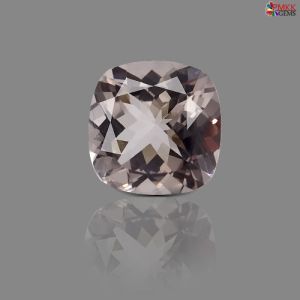
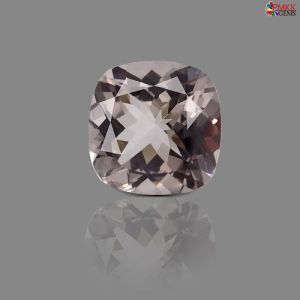
Pink Morganite Stone
Pink Morganite, a beryllium aluminum silicate (Be₃Al₂Si₆O₁₈), is a gemstone from the beryl family, sharing lineage with natural emeralds and natural aquamarines. Its delicate pink to peach hue stems from trace manganese impurities, which tweak its crystal lattice to absorb specific light wavelengths, yielding soft, warm tones. Formed in pegmatite deposits under high-pressure, high-temperature conditions, morganite’s hexagonal crystal structure contributes to its durability, rating 7.5–8 on the Mohs scale. This toughness, paired with its vitreous luster, makes it a favorite for jewelry, though its cleavage requires careful cutting to avoid fractures.
The stone’s color can vary from pale blush to vivid peach, often treated with heat to enhance saturation or remove yellowish tinges. Irradiation is sometimes used to deepen the pink, though natural, untreated stones are prized for their subtle clarity. Morganite’s pleochroism—showing different colors from different angles—adds visual depth, especially in larger faceted cuts. Its refractive index (1.57–1.60) ensures decent brilliance, but inclusions like feathers or veils can affect transparency.
Sourced primarily from Brazil, Madagascar, and Afghanistan, morganite’s value hinges on color intensity, clarity, and size. Larger stones (10+ carats) are common due to its formation in sizable crystals, but flawless specimens are rare. Beyond aesthetics, it’s chemically stable, resisting wear from daily exposure. Clean with mild soap; avoid harsh chemicals. Its allure lies in balancing understated elegance with robust gemological properties.
Pink Morganite Stone Price
Pink morganite has surged in popularity as a dreamy, budget-friendly gemstone choice for engagement rings and fine jewelry, offering romantic hues at accessible prices. While generally more affordable than diamonds or sapphires, morganite’s price can vary significantly based on several key factors. Color intensity is the biggest influencer—stones with rich, saturated pink to purplish-pink tones are more valuable than pale or overly light variants. Larger carat weights also increase cost, especially since high-quality morganite over 5 carats is rarer and more desirable.
Clarity plays a crucial role too; eye-clean pink morganite stones with minimal inclusions command higher prices, while visible flaws can reduce value. Cut quality enhances brilliance and sparkle, with well-proportioned cushion, oval, and emerald cuts maximizing the stone’s natural luster. Natural, untreated morganite is preferred and priced higher than heat-treated or dyed pieces, which may appear more pink but lack authenticity. Origin can also impact worth, with premium stones often linked to Afghanistan, Madagascar, or Mozambique.
Thanks to its growing demand and elegant appeal, top-tier morganite can reach impressive per-carat values—yet it remains an excellent value compared to traditional precious gems. Whether you're shopping for a statement ring or a delicate pendant, understanding these pricing factors helps you find a beautiful, responsibly sourced pink morganite that delivers both style and smart value.
Morganite

Filter
Shopping Options

Customer Reivews

"I recently purchased an emerald from PMKK gems and I couldn’t be more satisfied with my experience. The quality of the gemstone is absolutely remarkable—clear, vibrant, and flawless. It’s evident that they only deal in the finest gemstones.I highly recommend this store to anyone looking for high-quality gemstones and expertly crafted, bespoke jewellery. Highly recommended. "
- Vinesh V
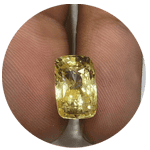
" Recently purchased a top quality 7.7 carat yellow sapphire from pmkk gems and I am extremely satisfied with quality and price of the piece. They also provided gem lab report to which erased all my doubts regarding authenticity. I strongly recommend pmkk gems name to anyone who is looking for purchasing premium quality rashi ratan. "
- Mukesh Soni

" I was afraid to shop ring online .whether it will be really genuine or not but to my surprise pmkk gems send it with a super secure packing and the built quality is awesome and finishing of the ring is outstanding.I'm really impressed! "
- ZESTY VINES

"This place has an incredible selection of gemstones—the best I’ve seen around. It definitely helps if you know what you’re looking for and have some knowledge about gems, but Harsh is great at guiding you to the right choice. I highly recommend this shop for gem shopping! It’s a little off the beaten path, but absolutely worth it. The prices are reasonable for the quality, and they even managed to set the gems I chose into a pendant and ring in less than a day."
- Mark Jamiel

" Just receive this nice imperial topaz ring from Tham and it was cost 45k. I did order it from South Africa. Overall experience was nice. Akanksha was very helpful and provide a good service. Only complaint is I think they little expensive with stone but I'm happy with it. I did receive good and clear quality stone"
- Lutfur Rahman Rana

"This place has an incredible selection of gemstones—the best I’ve seen around. It definitely helps if you know what you’re looking for and have some knowledge about gems, but Harsh is great at guiding you to the right choice. I highly recommend this shop for gem shopping! It’s a little off the beaten path, but absolutely worth it. The prices are reasonable for the quality, and they even managed to set the gems I chose into a pendant and ring in less than a day. "
- Knight Rider


Agate Stone
Amber Stone
Ametrine Stone
Amethyst Stone
Aquamarine
Aventurine
Bloodstone
Blue Moon Stone
Blue Topaz
Blue Zircon
Citrine (sunela)
Garnet
Green Tourmaline
Green Amethyst
Green Onyx
Imperial Topaz
Iolite (Kaka Neeli)
Irani Feroz
Labradorit
Larimar
Lapis (lazuli)
Lemon Topaz
Ocean Jasper
Opal stone
Peridot
Sulemani Hakik
Tanzanite Stone
Tiger Eye Stone
White Topaz
White Zircon
Yellow Fluorite
Yellow Topaz
Yellow Zircon
Rose Quartz