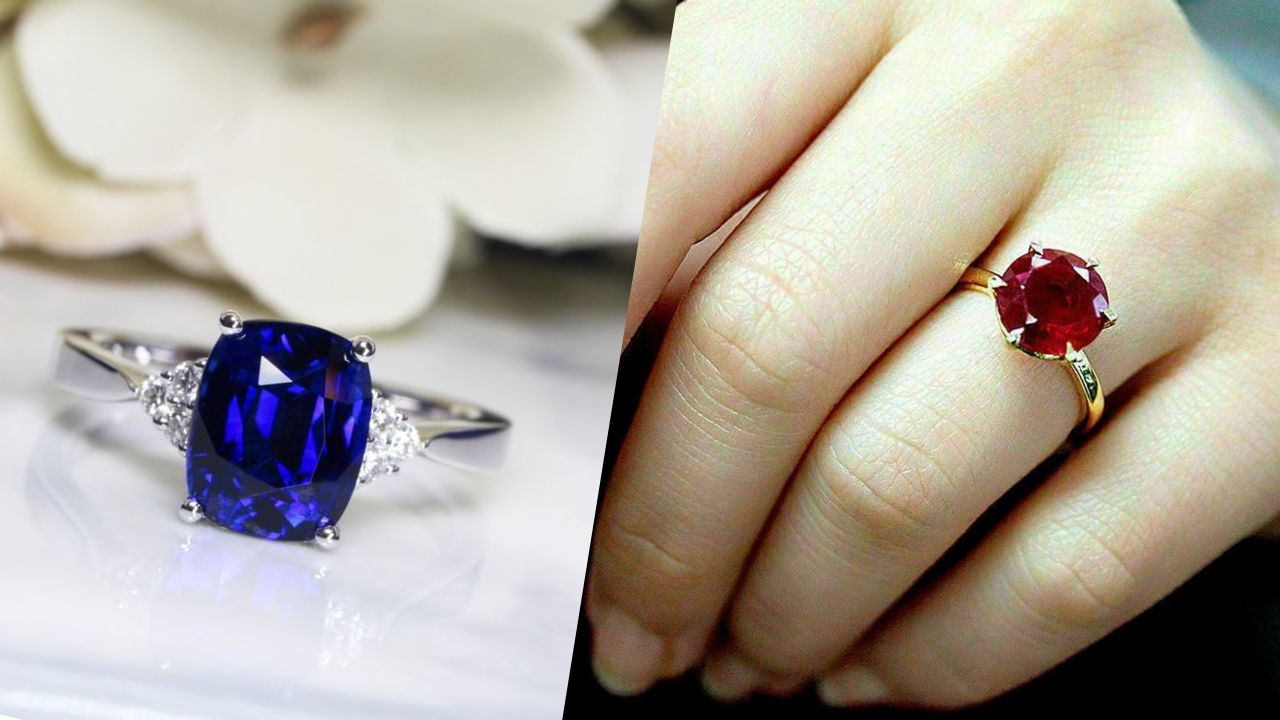
Ruby vs Sapphire: Whenever the word gemstone pops up in a conversation or our minds, the pictures of rubies and sapphires always come first. Belonging to the same mineral family (corundum), natural ruby stones and sapphire are by leaps and bounds the biggest and the most popular gems that dominate the world of gems, and their demand cannot be fathomed.
When two titans stand in the same ring, endless comparisons are bound to happen. For ages, numerous comprehensive and mind-jolting comparisons have been made between ruby and sapphire gemstones, and we haven’t jumped to a concrete conclusion till yet. Reason? Because both gemstones are scintillating, timeless, and valuable in their own ways. Ruby vs Sapphire comparison may not come to a solid conclusion, but a comprehensive comparison can help our readers pick the right gem between the two and get the best bang for their invested bucks.
In this all-inclusive blog post, we bring you the most detailed and jolting comparison between sapphires and rubies that will help you pick the best gemstone as per your needs.
Ruby vs Sapphire: Origin
Though born from the same mineral heart – corundum (Al₂O₃) – rubies and sapphires emerge from vastly different geological crucibles, their fiery red and cool blue hues etched by distinct elemental whispers during formation. The original chuni stone passionate crimson is a rare geological lottery win, demanding the presence of chromium (Cr) within intensely pressurized and heated metamorphic realms. Picture ancient sea floors transformed into marble mountains during colossal continental collisions: it’s here, deep within these aluminum-rich rocks baking under extreme heat and pressure, that trace chromium infiltrates the growing corundum crystals. Chromium is scarce in these hostile conditions, making rubies significantly rarer.
Sapphires, dazzling in blues but also a rainbow of other colors (all sapphires except red), owe their classic deep azure to the alchemy of iron (Fe) and titanium (Ti). They form more readily in two distinct ways: 1) Within the complex chemistry of silica-poor igneous magmas (like nepheline syenite) crystallizing far below the surface, where iron and titanium are abundant; or 2) as xenocrysts – ancient crystals ripped from the mantle or lower crust – hitching violent rides upwards in basaltic lava flows, literally traveling to the surface in volcanic elevators. While sapphires can also form in metamorphic settings like rubies, their diverse origins, especially the volcanic pathway, make them more geographically widespread. Thus, a ruby’s red sings of rare chromium surviving Earth’s mountain-forging fury, while a sapphire’s blue often whispers tales of deep magmatic chambers or explosive volcanic journeys – a shared mineral heritage diverging spectacularly at the elemental crossroads of creation.
Sapphire vs Ruby: Color
Rubies are renowned for their rich, fiery red tones, a color that has long been associated with passion, love, and vitality. The presence of chromium is responsible for this intense red hue, and in some cases, vanadium can also contribute to the stone’s coloration. The most prized rubies display a deep, vivid red often described as “pigeon blood” red—a term that signifies the purest and most saturated shade, highly coveted in the gemstone market. This color can range from purplish-red to orangy-red depending on the presence of secondary hues, but it is the purity and intensity of the primary red that determines a ruby’s value. Rubies are frequently heat-treated to enhance clarity and color, making the natural, untreated specimens especially rare and valuable.
Sapphires, on the other hand, are traditionally associated with blue—specifically a velvety, cornflower blue that evokes images of twilight skies and regal elegance. This classic indraneelam stone gets its color from the presence of iron and titanium within the corundum structure. However, unlike rubies, which are exclusively red (by definition), sapphires come in a wide array of colors including pink, yellow, green, purple, and even colorless, known collectively as “fancy sapphires.” Despite this variety, the blue sapphire remains the most iconic and widely recognized. Among blue sapphires, those with a medium to medium-dark tone and strong saturation are considered the most desirable, with Kashmir sapphires—featuring a unique silkiness and cornflower blue hue—being among the rarest and most valuable.
Ruby vs Sapphire: Physical Properties Comparison
Despite their identical mineral base, the striking difference betweentop quality yaqoot stone and sapphire lies in their color—a result of trace elements. Rubies owe their vivid red hues to the presence of chromium, which can range from pinkish to deep blood red depending on concentration and lighting. Sapphires, on the other hand, are most commonly recognized in their iconic deep blue, which is caused by traces of iron and titanium. However, sapphires can occur in nearly every color of the rainbow—yellow, green, purple, and even colorless—except red (because red corundum is classified as ruby).
When it comes to refractive index, both ruby and sapphire score similarly at approximately 1.76 to 1.77, contributing to their brilliance and light dispersion, though neither displays the intense fire seen in diamonds. Their specific gravity is also closely matched, typically around 3.95 to 4.03, which helps gemologists differentiate natural corundum from similar-looking but less dense synthetic or imitation stones.
In terms of cleavage, both stones exhibit no true cleavage, which enhances their structural integrity under mechanical stress. This feature, combined with their high hardness and excellent toughness, makes them resilient against chipping and breakage. However, both ruby and natural blue sapphire gemstone can show conchoidal or uneven fracture when subjected to extreme force.
Another notable physical property is pleochroism, which is the ability of a crystal to display different colors when viewed from different angles. Both ruby and sapphire exhibit this optical trait to varying degrees, with ruby showing red to purplish-red shifts and blue sapphire exhibiting blue to greenish-blue pleochroism, depending on the quality of the stone and the lighting conditions.
Sapphire vs Ruby: Price Comparison
When comparing the prices of sapphires and natural rubies, both precious gemstones command significant value in the jewelry market, though several factors influence their relative costs. Rubies, being the red variety of corundum, are generally considered rarer than sapphires and often carry premium pricing, particularly for specimens exhibiting the coveted “pigeon’s blood” red color. High-quality Burmese rubies can command prices ranging from $1,000 to over $10,000 per carat, with exceptional stones reaching astronomical figures at auction. The scarcity of fine rubies, combined with strong cultural associations with passion and power, drives their market value consistently higher than most other colored gemstones.
Sapphires, encompassing all non-red varieties of corundum, present a more varied pricing landscape due to their diverse color spectrum. Blue sapphires, particularly those from Kashmir, Ceylon, and Burma, represent the most valuable category within the sapphire family, with prices for premium stones ranging from $800 to $8,000 per carat. The legendary Kashmir sapphires, known for their velvety blue appearance, can exceed ruby prices when exceptional specimens appear at market. However, other sapphire colors including yellow, pink, white, and padparadscha generally trade at lower price points, typically ranging from $200 to $3,000 per carat depending on quality and origin.
The four C’s of gemstone evaluation—color, clarity, cut, and carat weight—play crucial roles in determining the final price of both rubies and sapphires. Color saturation and hue consistency are particularly important for rubies, where even slight variations toward orange or purple can significantly impact value. For sapphires, the depth and purity of blue in traditional varieties, or the uniqueness and appeal of fancy colors, drive pricing decisions. Clarity standards differ between the two stones, with rubies being more forgiven for inclusions due to their rarity, while sapphires are often expected to display higher clarity levels at comparable price points.
Ruby vs Sapphire: Treatment
The most common and widely accepted treatment for both is heat treatment. This ancient practice, often considered a continuation of the gem’s natural formation process, involves heating the stones to high temperatures (ranging from hundreds to thousands of degrees Celsius) in a controlled environment. For rubies, heat treatment can intensify their coveted red hue by dissolving impurities like iron and titanium that cause undesirable brown or orange tints, and can also improve clarity by reducing inclusions. Similarly, sapphires benefit from heat by developing or intensifying their natural colors, often transforming pale or unevenly colored stones into more vibrant and appealing shades, while also improving transparency by reducing “silk” (rutile needles). While heat-treated stones are still highly valued and make up the vast majority of the market, fine-quality, untreated rubies and sapphires are exceptionally rare and command significant premium prices due to their natural perfection.
Beyond heat, other treatments exist, though their impact on value and acceptance varies considerably. Diffusion treatment involves introducing chemical elements, such as titanium or beryllium, into the surface of the gemstone at high temperatures to alter or enhance its color.
Sapphire vs Ruby: Symbolism & Astrological Benefits
Sapphire
Symbolism: Sapphire, with its deep blue hues, represents wisdom, loyalty, and nobility. It is often associated with truth, sincerity, and spiritual enlightenment, symbolizing divine favor and protection in various cultures.
Astrological Benefits: Linked to Saturn in Vedic astrology, sapphire is believed to enhance discipline, focus, and mental clarity. It is recommended for Capricorn and Aquarius natives to promote success, stability, and protection from negative energies. Blue sapphire (Neelam) is particularly valued for its ability to bring wealth and resolve obstacles, but it must be worn with caution due to its potent energy.
Ruby
Symbolism: Ruby, with its vibrant red color, symbolizes passion, courage, and vitality. It is associated with love, power, and leadership, often seen as a stone of life force and emotional strength.
Astrological Benefits: Connected to the Sun in Vedic astrology, ruby is thought to boost confidence, vitality, and leadership qualities. It is ideal for Leo natives, enhancing their charisma and authority while offering protection and prosperity. Ruby (Manik) is believed to improve health and strengthen willpower.
Ruby vs Sapphire: Popularity & Affordability
Popularity:
Both ruby and sapphire are highly popular gemstones, often grouped among the “Big Four” gemstones alongside emerald and diamond, prized for their beauty and durability.
Ruby is especially valued for its deep, vibrant red color, rarity, and historical significance, symbolizing passion and love. It is a highly coveted gem with strong emotional and symbolic appeal.
Sapphire is known for its versatility in color (including blue, pink, yellow, green, and others except red, which is classified as ruby), durability, and popularity in engagement rings. It symbolizes wisdom, faith, and blessings, making it widely appreciated across various cultures and uses.
While rubies are rarer, sapphires are more adaptable in terms of color options, which contributes to their broad appeal.
Affordability:
Generally, fine-quality rubies are more expensive than sapphires due to their rarity and the desirability of their rich red color. Record prices for rubies can reach up to $1,000,000 per carat, whereas sapphires typically range from about $450 to $11,000 per carat depending on quality.
Sapphire prices vary more widely because of the range of colors and qualities available, with good-quality sapphires often being more affordable than top-tier rubies.
Both stones have the same hardness (9 on the Mohs scale), making them durable and suitable for everyday wear, which adds to their value in jewelry markets.
Synthetic or lab-created versions of both rubies and sapphires are available at lower prices, offering more affordable options without sacrificing durability.
Summary:
Rubies tend to be more expensive and rarer, prized for their passionate red color and symbolism.
Sapphires are more popular for their color variety and versatility, often more affordable than rubies.
Choosing between them often depends on personal preference for color, symbolism, and budget, as both are durable, valuable, and sought-after gemstones.
FAQs
Is Ruby better than Sapphire?
The answer to this question depends on what you value most in a gemstone. Ruby gemstones are highly valued for their deep red colour, rarity, and historical significance. Sapphire, on the other hand, is prized for its durability, versatility in colour, and popularity in engagement rings. Both gems have unique characteristics and beauty, so it ultimately comes down to personal preference.
Is Ruby more valuable than Sapphire?
The value of a gemstone is determined by several factors, including rarity, colour, clarity, and size. Ruby is generally considered more valuable than sapphire due to its relative rarity and highly desirable red colour. However, the value of each gemstone can vary greatly based on individual characteristics and market demand.
Is Ruby just red Sapphire?
No, ruby is not just red sapphire but can exhibit hues of Pink sapphires. Although both gems are varieties of the mineral corundum and share many similarities, they have distinct chemical compositions that give them unique characteristics. Ruby is composed of aluminium oxide with trace amounts of chromium that give it its distinctive red colour. Sapphire, on the other hand, can come in a variety of colours, including blue, yellow, pink, and purple, and is composed of aluminium oxide with trace amounts of iron, titanium, and other elements.
Conclusion
The question of whether yellow sapphire, blue sapphire or ruby reigns supreme ultimately depends on personal preference, as both gems have unique characteristics and beauty. Sapphire is known for its durability, versatility in colour, and popularity in engagement rings.
Ruby, on the other hand, is valued for its vibrant red hue, rarity, and historical significance. While sapphire may have a slight edge in terms of overall durability and variety, ruby is a highly coveted gemstone that commands high prices and remains a symbol of love and passion.
The choice between sapphire and ruby comes down to what appeals to you most in terms of beauty, symbolism, and personal style.
