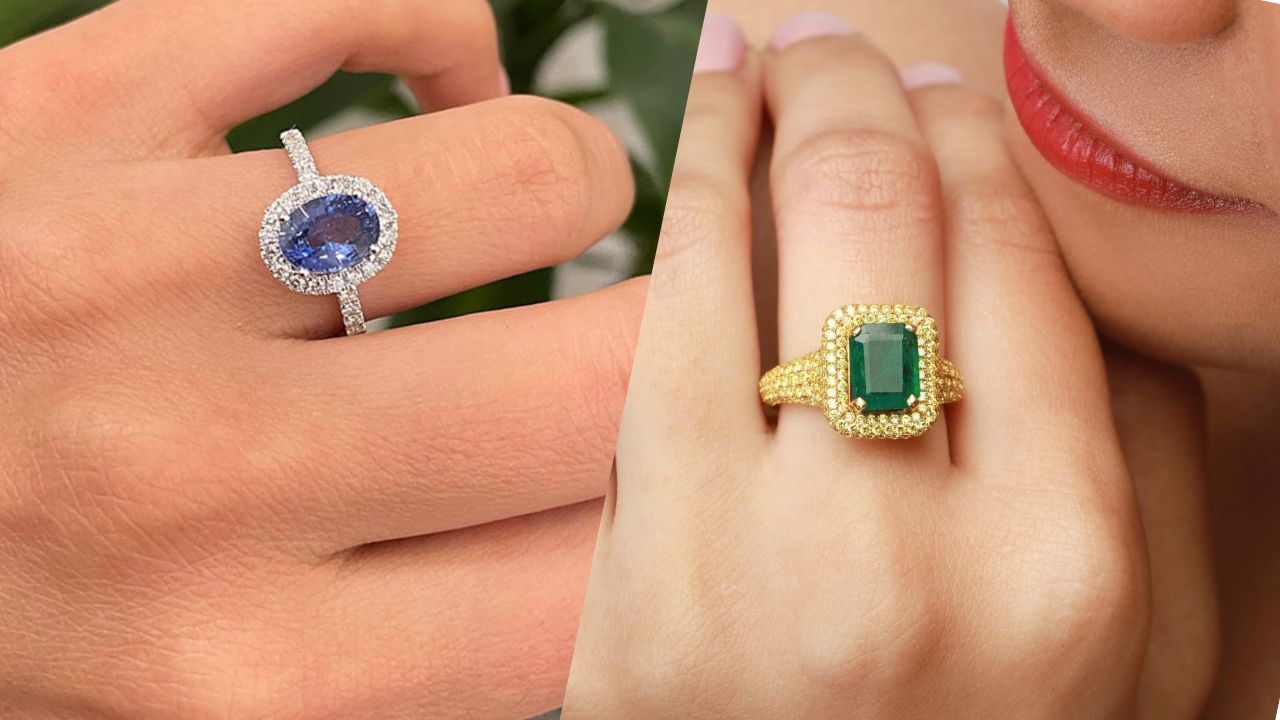
Sapphire vs Emerald: When it comes to choosing a gemstone for jewelry or investment, sapphire and emerald stand out as two of the most coveted and timeless options. Both belonging to the “Big Four” precious gemstones, these vibrant treasures captivate with their stunning hues and rich histories. Sapphires, renowned for their deep blue brilliance, symbolize wisdom, loyalty, and nobility, often associated with royalty and spiritual enlightenment. Emeralds, with their lush green allure, evoke renewal, fertility, and elegance, long revered in ancient cultures and modern fashion alike. But how do these gems compare in terms of durability, rarity, value, and aesthetic appeal?
This blog post dives into the fascinating world of sapphire versus emerald, exploring their unique properties, geological origins, and cultural significance. Whether you’re a gem enthusiast, a jewelry collector, or simply deciding on the perfect stone for your next piece, understanding the strengths and distinctions of these gems is essential. From hardness and care requirements to market trends and symbolism, we’ll uncover what sets sapphires and emeralds apart, helping you make an informed choice in this sparkling showdown of nature’s finest creations.
Peek Here: – Blue Sapphire vs Blue Spinel
Sapphire vs Emerald: Origin
Sapphires and emeralds represent two of the most coveted gemstones in human history, yet their origins tell distinctly different geological stories. Indraneelam stones belong to the corundum mineral family and form through aluminum-rich metamorphic processes deep within the Earth’s crust, typically in environments with low silica content and high temperatures exceeding 1000°C. The most renowned sapphire deposits are found in Kashmir, Myanmar (Burma), Sri Lanka, and Madagascar, with each location producing stones with characteristic color variations and clarity profiles. The formation process occurs over millions of years as aluminum oxide crystallizes under extreme pressure, with trace elements like iron and titanium creating the signature blue coloration, though sapphires can occur in virtually every color except red.
Emeralds, conversely, are beryl crystals that require a far more specific and rare set of geological conditions to form. These precious stones develop in hydrothermal veins where beryllium-rich pegmatites interact with chromium or vanadium-bearing host rocks, creating the distinctive green coloration that defines emeralds. The world’s finest emeralds originate from Colombia’s Muzo and Chivor mines, where unique geological conditions involving ancient sea beds and tectonic activity created ideal formation environments. Other significant sources include Zambia, Brazil, and Afghanistan, though Colombian pachu stones remain the benchmark for quality due to their exceptional color saturation and relative clarity.
Sapphire vs Emerald: Color
When comparing sapphires and emeralds, one of the most striking and distinguishing features is their color. Sapphires are best known for their deep, rich blue hues, although they can actually be found in a wide range of colors, including pink, yellow, green, and even colorless. The most prized sapphires exhibit a vivid, velvety blue, often referred to as “cornflower blue,” which is highly sought after in the gemstone market. This color is due to the presence of trace elements such as iron and titanium within the mineral corundum. In contrast, emeralds are celebrated for their lush green color, which ranges from light to deep, intense shades.
The finest margatham stones display a vivid green with a slight bluish undertone and are highly transparent, though most contain inclusions known as “jardin,” which are generally accepted as part of the stone’s natural character. Their distinctive color comes from trace amounts of chromium and vanadium within the mineral beryl. While both gemstones captivate with their beauty, sapphire’s cool, celestial tones offer a stark contrast to the warm, verdant appeal of emeralds, making each uniquely desirable based on personal taste and cultural symbolism.
Bookmark Worthy: – Blue sapphire vs Amethyst
Emerald vs Sapphire: Physical Properties
Emerald and sapphire, while both precious gemstones, possess distinct physical properties that differentiate them significantly. Hardness is a key distinction: sapphire, a variety of corundum, ranks a robust 9 on the Mohs scale, second only to diamond, making it exceptionally durable and resistant to scratching. Emerald, a variety of beryl, is softer, rating 7.5 to 8 on the Mohs scale, and is generally more prone to chipping due to its natural inclusions. These internal characteristics, often called “jardin” (French for garden), are common in emeralds and are considered part of their unique charm, though they can affect clarity and toughness. Sapphires, conversely, typically exhibit higher clarity with fewer inclusions.
In terms of crystal structure, both minerals crystallize in the hexagonal system. Emeralds form in six-sided prismatic structures, while sapphire, though trigonal (rhombohedral), is often treated as hexagonal for practical purposes. Their specific gravity also varies; sapphire is denser at approximately 4.00, meaning a one-carat sapphire will appear smaller in volume than a one-carat emerald, which has a specific gravity around 2.72. The refractive index of sapphire (1.762-1.770) is higher than that of emerald (1.577-1.583), contributing to sapphire’s often greater brilliance and sparkle. Finally, regarding cleavage, sapphire typically lacks cleavage, meaning it doesn’t break along distinct planes, and instead fractures conchoidally (with smooth, curved surfaces). Emerald, however, can exhibit poor basal cleavage, making it more susceptible to breakage if struck along those planes. These physical differences impact their suitability for various jewelry designs, their care requirements, and ultimately their overall perceived durability and brilliance.
Emerald vs Sapphire: Price Comparison
Emeralds and sapphires are both highly valued gemstones, but their price points can vary significantly depending on a range of factors including color, clarity, carat weight, origin, and market demand. Sapphires, which rank 9 on the Mohs scale of hardness, are known for their exceptional durability and brilliance, making them a popular choice for fine jewelry, especially engagement rings.
The most prized sapphires exhibit a vivid blue hue—such as the rare cornflower blue from Kashmir or the rich royal blue from Burma (Myanmar)—and these can command extremely high prices, particularly when they are of substantial size and have excellent clarity. In comparison, emeralds, which rank lower on the Mohs scale at 7.5 to 8, are more prone to inclusions and fractures, often requiring treatment to enhance stability and appearance. While emeralds are cherished for their deep green color caused by chromium or vanadium, top-quality and natural panna stone price are because of high transparency and minimal inclusions are rare and valuable.
Colombian emeralds, especially those from renowned mines like Muzo or Chivor, often achieve the highest prices within their category. However, when comparing stones of similar carat weight and quality, fine sapphires generally surpass emeralds in value due to their superior hardness, broader market appeal, and higher demand in the luxury jewelry sector. Ultimately, while both gemstones can be expensive, sapphires—particularly those with exceptional color and origin—tend to hold greater monetary value than emeralds in most cases.
Read Worthy: – Ruby vs Emerald
Sapphire vs Emerald: Astrological Benefits
Blue Sapphire aka original Neelam stone, primarily linked to Saturn (Shani), is revered for its powerful grounding and transformative energy. It’s sought to mitigate the harsh effects of a weak or afflicted Saturn in the birth chart, believed to bring discipline, focus, stability, and career success, particularly in fields requiring endurance like law, engineering, or administration. It can foster patience, responsibility, and protection from major obstacles or chronic difficulties. However, sapphire is considered a potent and complex gem; wearing it without expert astrological recommendation based on a detailed chart analysis can be risky, potentially amplifying negative Saturnian influences like delays, depression, or loss if incompatible.
Emerald (Panna), governed by Mercury (Budh), focuses on enhancing intellect, communication, and adaptability. It’s ideal for strengthening a weak or benefic Mercury, boosting clarity of thought, learning abilities, business acumen, eloquence, and creative expression. Emerald is associated with growth in education, writing, commerce, and technology, promoting mental agility, wit, and harmonious relationships through better understanding. It’s also believed to support healing and nervous system balance. Generally considered safer than sapphire, emerald can often be worn on a trial basis after consultation; its effects are typically more intellectual and communicative, with fewer risks of severe negative impacts if slightly mismatched, though professional guidance is still crucial.
Don’t Miss: – Emerald vs Peridot
Sapphire vs Emerald: Treatment
Both sapphires and emeralds undergo treatments to enhance their appearance, but the methods and prevalence differ significantly. Sapphires are commonly heat-treated to improve color saturation and clarity, a process that mimics natural geological conditions. This widely accepted treatment, applied to over 90% of sapphires, is stable, permanent, and doesn’t significantly affect value, though untreated sapphires command a premium due to rarity. Some sapphires undergo diffusion or beryllium treatment to add color or star effects, but these are less common and require disclosure, as they may impact value or durability.
Conversely, emeralds are almost universally treated due to their naturally included structure. The most common treatment is oiling or resin-filling to minimize visible fractures and enhance clarity, using cedarwood oil or synthetic resins. While widely accepted, these treatments are less stable, as oils can dry out over time, requiring re-treatment. Untreated emeralds of high quality are exceptionally rare and highly valued. Both gems’ treatments are standard in the industry, but sapphires generally offer more durability post-treatment, while emeralds demand careful maintenance. Buyers should always request treatment disclosures to understand the gem’s long-term care and value.
Also Read: – Emerald vs Jade
Emerald vs Sapphire: Popularity & Affordability
When it comes to popularity and affordability, emeralds and sapphires each hold a significant place in the world of gemstones, though they appeal to different tastes and budgets. Sapphires tend to be more popular overall due to their versatility, durability, and broad color range—especially the iconic blue variety, which is often associated with royalty and elegance. Blue sapphires are frequently featured in engagement rings and high-end jewelry, contributing to their widespread appeal. Emeralds, while also highly cherished, have a more niche popularity, primarily among collectors and those drawn to their rich green hue and historical significance.
In terms of affordability, sapphires generally offer more pricing flexibility. Because they come in many colors and quality grades, there are more affordable options available to consumers. High-quality sapphires can be expensive, but they are often more affordable than top-grade emeralds. Emeralds, particularly those with deep color and few inclusions, are among the most valuable gemstones on the market. Their rarity and fragility—due to their natural inclusions and lower hardness compared to sapphires—can drive up both their price and the cost of setting or maintaining them. Overall, while both stones are treasured, sapphires tend to be more accessible and broadly popular, whereas emeralds are viewed as more exclusive and luxurious, often commanding a higher price at the top end.
Check Out: – Emerald vs Green Sapphire
