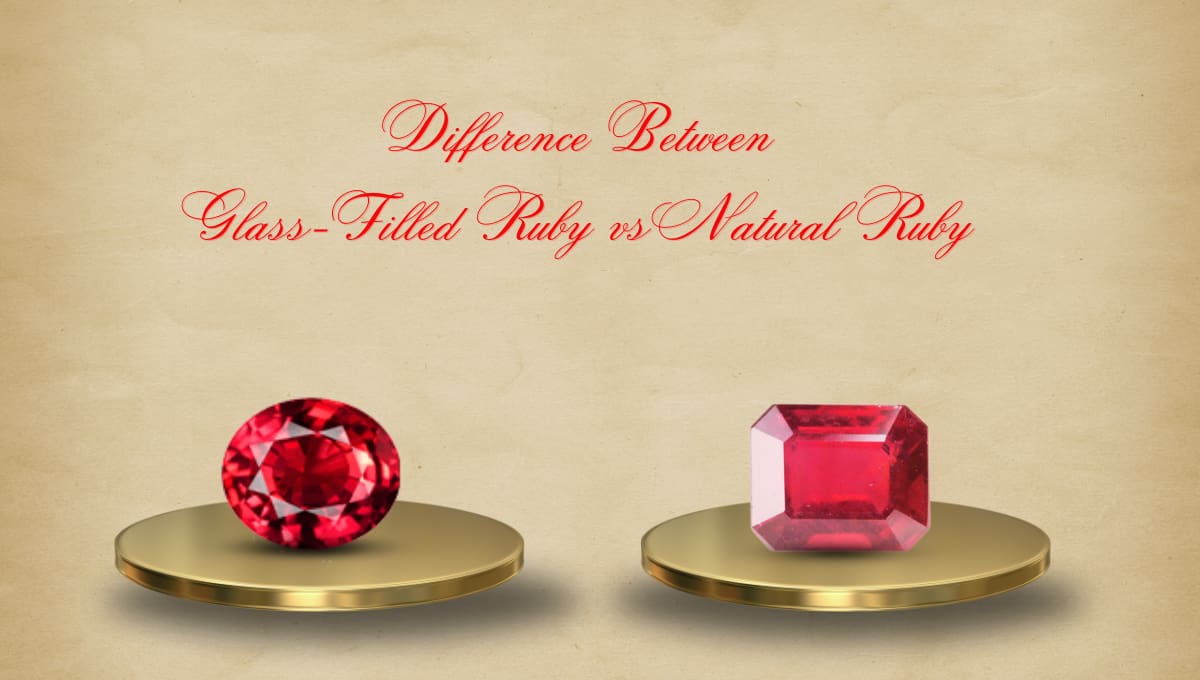
Rubies have captivated and enthralled humanity for centuries with their alluring red hue and mystical associations. Yet behind the sparkle of many rubies on the market today lies an intricate web of treatments and enhancements. The ruby world is divided into two camps – natural, unenhanced rubies versus their ubiquitous counterpart, glass-filled rubies. At first glance, they may appear identical, but their origins and properties differ vastly.
The difference comes down to a tiny intruder – microscopic droplets of molten glass. While natural rubies form deep underground over eons, glass filling is a more recent innovation. By using high heat and pressure, manufacturers inject lead glass into surface-reaching cracks and fissures. This fills cavities, improves translucency, and masks imperfections. The results can be striking, producing rubies with intensified color and fewer visible flaws.
But are these “improved” rubies equal to Mother Nature’s creation? Purists argue no. They contend that glass filling produces rubies too perfect in color and clarity to match what the earth produces unaided. The controversy also extends to value and ethics, raising questions about disclosure and longevity. As consumers increasingly scrutinize ingredients and origins, the debate over what makes a “real” ruby rages on. Which camp will you join?
To help our valued readers and gemstone enthusiasts distinguish between glass-filled and real ruby lucidly, we have carved a detailed blog on Natural Ruby stone vs Glass Filled Ruby that will sway away all gloomy clouds of doubts.
Read Worthy: – Who Can Wear Ruby Stone
Difference Between Natural Ruby & Glass Filled Ruby
Natural Ruby vs Glass Filled Ruby: Origins
Natural Ruby: Born from the fiery embrace of Mother Earth, natural rubies are composed of the mineral corundum, colored by traces of chromium. Millions of years of pressure and heat sculpt these gems into dazzling masterpieces, each boasting unique inclusions and color variations that tell the story of their earthly journey.
Glass-Filled Ruby: A product of human ingenuity, glass-filled rubies are low-quality corundum rough infused with molten lead glass under high pressure and heat. This treatment fills fractures and enhances color, creating a visually stunning, yet artificial, gemstone.
Peek Here: – How to Tell If A Ruby is Real
Natural Ruby vs Glass Filled Ruby: Color & Inclusions
Visual Cues:
Color: Natural rubies exhibit a vibrant, yet nuanced, red with subtle color variations and visible inclusions. Glass-filled rubies often boast an overly uniform, almost artificial, red hue.
Inclusions: Natural rubies, like fingerprints, possess unique inclusions like rutile needles or color zoning. Glass-filled rubies may have gas bubbles, cobweb patterns, or a “spongy” appearance under magnification.
Luster: Natural rubies possess a vitreous luster, a glassy brilliance with depth. Glass-filled rubies may have a greasy or waxy luster, lacking the vibrancy of the natural gem.
Don’t Miss: –How To Wear Ruby Stone
Natural Ruby vs Glass Filled Ruby: Scrutiny of Physical Properties
Refractive Index: Gemological labs measure the refractive index, a stone’s ability to bend light. Natural rubies have a higher refractive index (1.770 – 1.780) compared to glass-filled rubies (1.540 – 1.550).
Fluorescence: Under long-wave ultraviolet light, natural rubies exhibit a characteristic red fluorescence, while glass-filled rubies remain inert or show weak orange fluorescence.
Spectroscopy: Advanced techniques like Raman spectroscopy can definitively identify the chemical composition, revealing the presence of lead glass in a treated ruby.
By considering all the above-stated technical methods, one can effortlessly distinguish between natural ruby and glass-filled ruby and pick the right ruby stone.
Must Read: – Ruby vs Diamond
Natural Ruby vs Glass Filled Ruby: Price & Value Gap
Natural rubies, with their rarity and beauty, command a significantly higher price than their glass-filled counterparts. The price of a natural ruby depends on its carat weight, clarity, color, cut, and origin. Glass-filled rubies, while aesthetically pleasing, are considerably less valuable due to their artificial nature and lower durability.
Beyond the Bling: Ethical Considerations
The ethical implications of glass-filled rubies are a matter of debate. While some argue they offer an affordable alternative to natural gems, others highlight the potential for deception and unfair pricing. Disclosing the treatment of a gemstone is crucial for ethical trade and informed consumer choices.
A Gemstone’s Journey: From Mine to Market
Understanding the journey of a ruby, from its formation in the Earth’s depths to its place in a dazzling masterpiece, adds a layer of appreciation to its beauty. Natural rubies represent millions of years of geological wonder, while glass-filled rubies showcase human ingenuity in manipulating nature’s creations.
In Conclusion:
Distinguishing between an original manik stone and a glass-filled ruby requires a keen eye, scientific know-how, and ethical awareness. By delving into their origins, visual cues, scientific properties, and value differences, you can confidently navigate the world of these captivating gemstones. Remember, true beauty lies not just in the sparkle, but in the story each stone whispers, waiting to be heard by the discerning eye.
So, the next time you encounter a dazzling ruby, ask yourself: Is it a fiery gem forged in the Earth’s furnace, or a cunning imposter cloaked in borrowed brilliance? With the knowledge gleaned from this blog, you’ll be well-equipped to answer that question and own a piece of the ruby’s captivating legacy, whether natural or artfully enhanced.
Check More: – How Do You Know If A Ruby Suits You?
