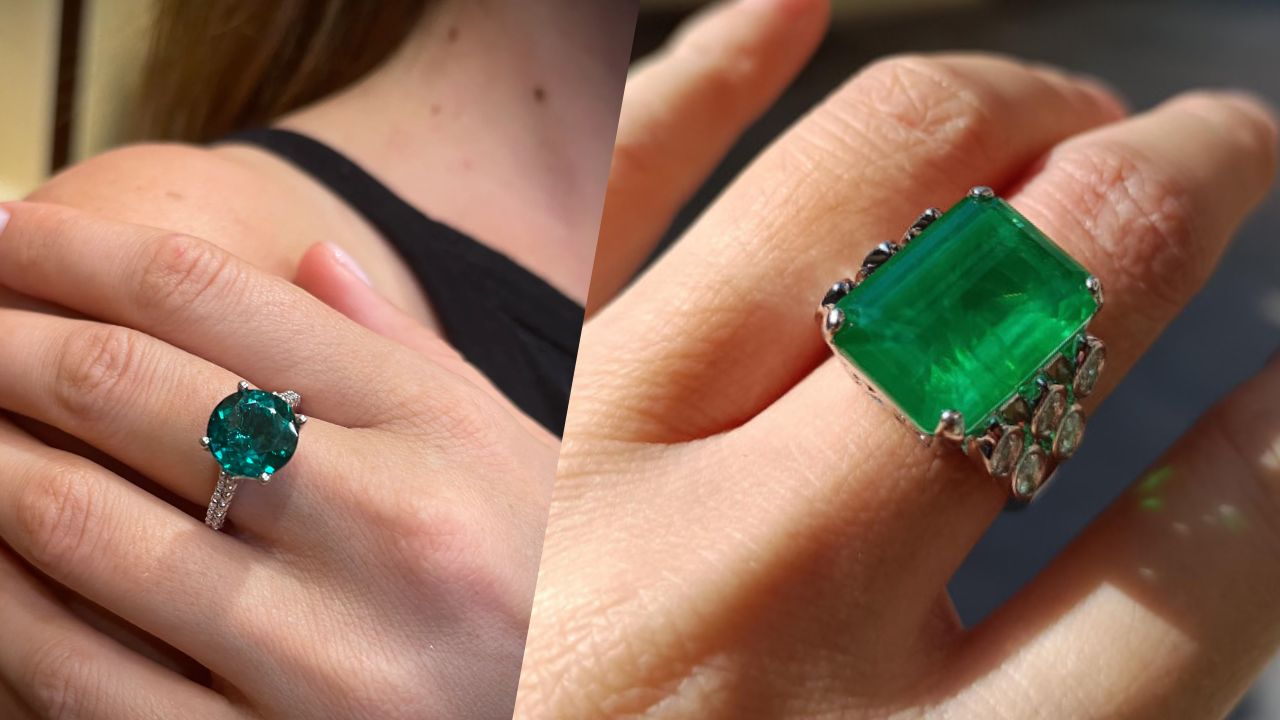
Emeralds are some of the most popular gemstones in the world, prized for their stunning green colour and rarity. However, not all emeralds are created equal, and two of the most sought-after varieties are the Zambian and Colombian emeralds. Both are known for their exceptional quality and beauty, but they have distinct differences that make them unique. Emeralds, with their captivating green allure, have long been treasured as one of the world’s most sought-after gemstones, symbolizing elegance and rarity. Among the finest sources, Zambian and Colombian emeralds stand out, each boasting unique characteristics that fuel a spirited debate among gem enthusiasts: which is better? Colombian emeralds, renowned for their vivid, slightly bluish-green hue, have historically set the global standard, prized for their transparency and rich color, often found in iconic jewelry pieces.
Meanwhile, Zambian emeralds, a rising star in the gem world, are celebrated for their deep, vibrant green tones with excellent clarity and fewer inclusions, offering a compelling alternative. This blog post dives into the heart of the comparison, exploring the distinct qualities of each—color, clarity, durability, and origin—while weighing their value in terms of aesthetics, rarity, and market appeal. Whether you’re a collector, jeweler, or simply captivated by these natural treasures, join us as we uncover the strengths and allure of Zambian and Colombian emeralds to help you decide which reigns supreme.
Understanding Zambian Emeralds
The emerald stone from Zambia are of the best quality. Zambia typically has a deeper, more saturated green colour. One of the most important geological discoveries of the modern era has been the discovery of emeralds from Zambia. Zambia is situated in Southern Africa, a region famous for its gemstones. Large-scale emerald mining in Zambia started around 1976. Emeralds from no other place on Earth have ever been able to offer such dependable quality.
Like all other emeralds, emeralds from Zambia were formed from a unique mixture of minerals, including beryllium, chromium, and vanadium. In other words, emeralds were created millions of years ago when metamorphic rock and granite impacted one another. Natural emeralds from Zambia are tougher than those from other countries, with Mohs hardness ratings ranging from 7.5 to 8. This places them just behind diamonds, which have a perfect 10 rating on the Mohs scale, and stones like rubies and sapphires, both of which have a Mohs scale rating of 9. Emeralds from Zambia are also less brittle and porous than those from other countries. The emeralds from Zambia are truly magnificent.
Understanding Colombian Emeralds
Colombian emerald, is well-known for its exceptional clarity and vibrant, rich green colour. This extremely rare and valuable gemstone is a range of intense lush green to a softer bluish-green shade. The finest and most expensive type of emerald gemstones on earth are Colombian emeralds, which are mined there. Colombia, a nation in South America, has produced some of the most expensive and premium quality emeralds on the world market for more than 4,000 years.
Emeralds are mainly produced in Colombia. It is renowned for its intense and mysterious emerald mines, which produce between 60 and 95 per cent of the world’s emeralds. The production of emeralds in Colombia has dramatically increased by about 75% over the past ten years, from 2000 to 2010. The iron content of Colombian emeralds is lower than that of Brazil and Zambia, among other nations. These emeralds are more expensive because they have fewer imperfections and fractions in them. The cost of a Colombian emerald per carat can range from $60 to $10,000 or even more. The best of them can sell for as much as US$150k per carat.
Peek Here: – Best Emerald Stone Substitutes
Zambian Emerald VS Colombian Emerald: Differences
Zambian Emeralds vs Colombian Emeralds: Origin
Colombian emeralds originate from the Eastern Cordillera of the Colombian Andes, primarily from three major mining regions: Muzo, Chivor, and Coscuez. These deposits formed approximately 65-35 million years ago during the Paleocene-Eocene periods through unique geological processes.Colombia has centuries of mining tradition, while Zambia’s commercial production began in the modern era with advanced mining techniques.
Zambian emeralds are found primarily in the Kafubu River area of the Copperbelt Province, with the Kagem mine being the largest single emerald mine in the world. These deposits formed approximately 450-500 million years ago during the Ordovician period.
Zambian Emeralds vs Colombian Emeralds: Color
The original pachu stones from Zambia are darker and more blue. It appears to be deep green or bluish green. Iron traces are what give colour its distinctive bluish undertone and high saturation. A bluish undertone and oversaturation detract from the image’s higher general quality.
It is said that Colombian emeralds have a purer, warmer green colour. The best rough emeralds are thought to come from Colombia. These emeralds are a richer, more vibrant shade of pure green. Due to their rarity in nature, deep green emeralds are highly prized and sought after. Comparatively speaking to other emeralds, Colombian emeralds typically contain more trace amounts of chromium, known as inclusion, which gives them the typically desired pure, bright, saturated green. Both their vivid saturation and impressive colour stand out.
Zambian Emeralds vs. Colombian Emeralds: Physical Properties
Color: Colombian emeralds are renowned for their vivid, slightly bluish-green hue, often considered the benchmark for emerald color due to their rich saturation. Zambian emeralds typically exhibit a deeper, more forest-green tone, sometimes with a slight yellowish undertone, offering a distinct, vibrant appeal.
Clarity: Zambian emeralds generally have fewer inclusions and better clarity, thanks to their geological formation, making them appear cleaner to the naked eye. Colombian emeralds, while stunning, often contain more visible inclusions, known as “jardin,” which can add character but may affect clarity.
Hardness: Both emeralds rank 7.5–8 on the Mohs scale, indicating similar durability. However, inclusions in Colombian emeralds can make them more prone to chipping, while Zambian emeralds’ clearer structure often enhances their resilience.
Crystal Structure: Both are varieties of beryl, with a hexagonal crystal structure, but Zambian emeralds often form in more stable conditions, resulting in larger, cleaner crystals. Colombian emeralds, formed in sedimentary environments, may have more complex inclusions.
Bookmark Worthy: – Most Expensive Emeralds
Zambian Emeralds vs. Colombian Emeralds: Price
When comparing Zambian emeralds and Colombian emeralds, price differences stem from factors like color, clarity, origin reputation, and market demand.
Colombian Emeralds :
Traditionally the most prized, Colombian markat stones are renowned for their vivid green color and historical significance. High-quality stones with excellent color and clarity can command premium prices—often ranging from $100 to over $10,000 per carat , depending on size and quality. The presence of inclusions is common and accepted, but cleaner stones are rarer and more valuable.
Zambian Emeralds :
Zambian emeralds tend to have a slightly darker green hue and often exhibit fewer inclusions than Colombian stones. They are generally more affordable, with prices typically ranging from $50 to $2,500 per carat . Their increasing popularity has boosted their market value, especially for high-quality specimens.
Zambian Emeralds vs. Colombian Emeralds: Benefits
Embracing Zambian emerald enhances intelligence, creativity, and finances. Therefore, it is believed that carrying a lovely, authentic Zambian Panna stone is good for one’s memory, creative thinking, and information growth. It makes it possible to overcome mental health issues like anxiety, fear, and depression.
The Colombian emerald gemstone is widely thought to be quite effective at enhancing the wearer’s memory, ability to be curious, and innovative instincts because it is connected to mercury, the planet of intelligence. Wearing a genuine Colombian emerald stone helps people who struggle with speech-related issues and scattered self-confidence.
Read Worthy: – Negative Effects of Emeralds
Zambian Emeralds vs. Colombian Emeralds: Inclusions
Compared to other types of emeralds, Zambian emeralds contain fewer eye-clean inclusions. Because of this, you need to search for an emerald from Zambia with few to no inclusions. However, it is nearly impossible to find emeralds without any obvious inclusions, even ones from Zambia.
A jagged multiphase inclusion that contained a gas bubble and one or more cubic crystals was the most frequent inclusion in Colombian Panna stones. The gas bubble in these stones was typically no larger than the associated cubic crystal and no larger than the inclusion as a whole.
Zambian Emeralds vs. Colombian Emeralds: Popularity & Affordability
Popularity:
Colombian: Universally considered the most prestigious and historically significant source. Renowned for their highly prized pure, vivid grassy green color (often slightly bluish or yellowish undertones). Synonymous with the “ideal” emerald hue. Generally more popular and iconic globally.
Zambian: Rapidly gaining significant market share and popularity. Known for a slightly cooler, more bluish-green color, often with higher clarity than Colombian stones. Their consistent supply appeals to modern jewelers. Popularity is rising steadily.
Affordability:
Zambian: Typically more affordable than Colombian emeralds of comparable size and quality. Zambia produces a larger volume of commercial-grade stones suitable for mainstream jewelry. This greater supply contributes to lower average prices.
Colombian: Generally command a higher price premium, especially for top-quality stones with the classic vivid green color and good clarity. Their legendary status and often more saturated color drive higher costs. Lower-quality Colombian stones can be found at various prices.
Also Check: – Dazzling Panna Stone Benefits
