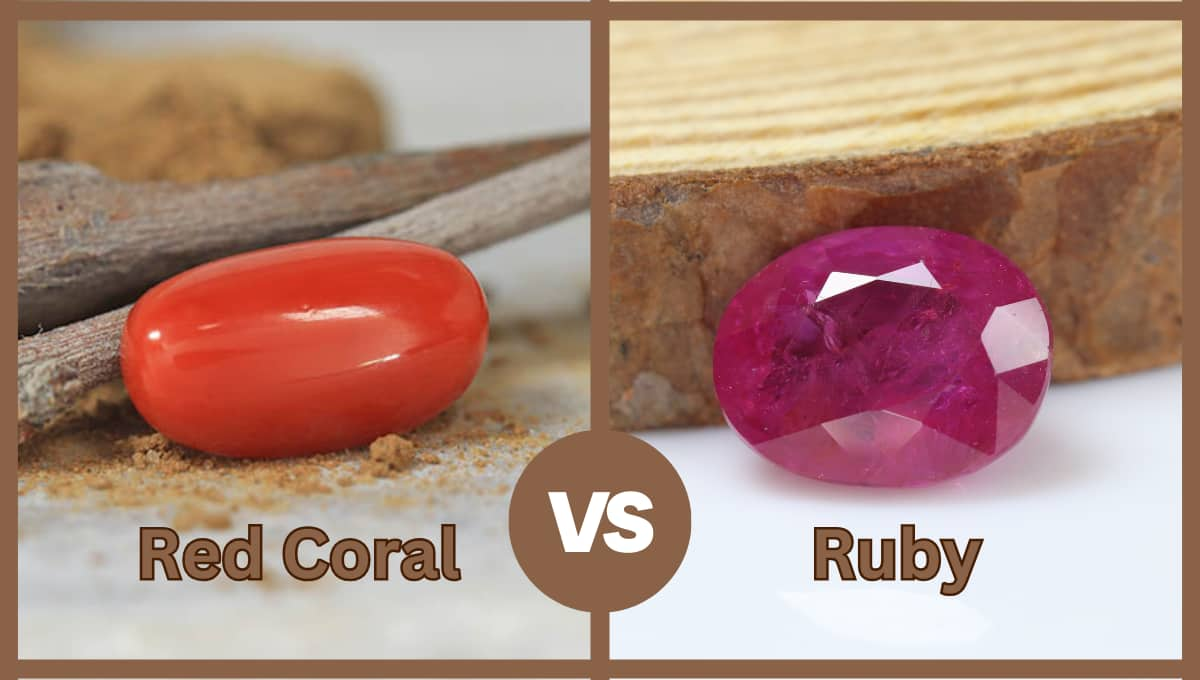
Ruby and red coral are two of the most sought-after, vibrant, and distinct gemstones that captivate gemstone enthusiasts with their unique allure, astrological significance and rich histories. Ruby, a widely celebrated precious gemstone is a variety of the mineral corundum renowned for its vibrant red hues. Symbolizing passion and vitality, rubies have adorned royalty and nobility for centuries, earning them a place among the most coveted gemstones. Their deep red color, often referred to as “pigeon’s blood,” is associated with love and strength. On the other hand, red coral, a product of marine life, is an organic gemstone derived from the skeletal remains of coral polyps.
A red coral stone is hailed for its intense red or pinkish-red tones. Red coral has been cherished since time immemorial for its protective and healing properties across various cultures. Both stones carry cultural significance and have adorned jewelry pieces throughout history, but their distinct origins, compositions, and metaphysical associations set them apart. Exploring the characteristics and lore surrounding ruby stone and red coral unveils the fascinating tales and diverse aesthetics that make each gemstone a unique and cherished choice in the world of jewelry and adornment.
In this blog post, we bring you the most detailed comparison between ruby vs red coral that will depict how these two gemstones greatly differ to each other and where they stand in terms of popularity and value.
Table of Contents
Ruby vs Red Coral: Differences & Which One to Pick?
Ruby vs Red Coral: Origin
Natural Manik stone and moonga stone both are outrageously popular for their striking red hues. Both gemstones originate from vastly different sources each contributing to their distinct characteristics and allure. Ruby gemstone is perhaps the most in-demand precious gemstone and is formed from the mineral corundum, primarily composed of aluminum oxide. The intense red color of rubies results from the presence of chromium and, in some cases, iron. These precious stones are typically found in igneous and metamorphic rocks, such as marble and basalt, and their mining locales include regions like Myanmar, Thailand, Mozambique, and India. However, Burma and Mozambique rubies are considered top-notch quality and the price can go as high as $50000 per carat.
In contrast to the original ruby gemstone, red coral is an organic gemstone originating from the skeletal structures of marine polyps, particularly species belonging to the Corallium genus. These colonies of polyps secrete calcium carbonate which intricate branching structures that, when harvested and polished, reveal the vibrant red or pink color associated with red coral. The Mediterranean Sea, notably off the coasts of Italy and Spain, has been a traditional source for high-quality red coral.
While rubies emerge from the depths of the Earth, red coral tells a tale of the ocean’s wonders. The differing origins contribute not only to their geological composition but also to the cultural and symbolic significance attached to each gemstone throughout history.
Also Check: – Ruby vs Diamond
Ruby vs Red Coral: Color
Ruby
Capture eyes for its Vibrant red color ranging from pinkish red to blood red. The deep red color is widely acknowledged and preferred in rubies/
One of the most intensely colored gemstones, often described as “pigeon blood red”
Refracts light strongly, allowing deep red hues to be seen
Color comes from trace amounts of chromium
Color can vary from stone to stone based on chromium content
Red Coral
Reddish-orange color, less vibrant than ruby.
Hue is closer to reddish pink or orangey red rather than pure red.
Color comes from natural pigments in the coral polyps as they grow their calcium carbonate skeletons.
Consistent in color since coral all produces similar pigments.
Does not refract or reflect light like faceted ruby, resulting in a more muted tone.
In summary, ruby exhibits a richer, deeper red color owing to its optical properties and chromium content. Red coral has a subtler reddish-orange tone coming from natural pigments. While ruby spans blood-red to pinkish-red hues, coral sits in the orangey-red to pink zone. So ruby emerges as the deeper, more quintessentially red gemstone of the two.
Ruby vs Red Coral: Hardness
As we all know the hardness of gemstones is measured on the Mohs scale, which ranges from 1 (the softest) to 10 (the hardest). Comparing the hardness of ruby and red coral reveals notable differences in their resistance to scratches and wear.
Without a shadow of a doubt, Ruby is one of the hardest gemstones in existence and ranks 9 on the Mohs scale of hardness. Its exceptional hardness makes it well-suited for everyday wear in jewelry, ensuring durability and resistance to abrasion and scratches via friction. This robust quality of natural rubies combined with its vibrant red color, contributes to the enduring popularity of rubies in various jewelry pieces.
On the other hand, red coral, an organic gemstone formed from the skeletal remains of marine polyps, has below-average hardness. Red coral typically ranks around 3.5 on the Mohs scale. While it is valued for its unique appearance and cultural significance, red coral requires careful handling to prevent scratches and damage. Due to its relatively lower hardness, red coral is often used in jewelry pieces that won’t be subjected to excessive wear and tear.
Peek Here: – How Do You Know If A Ruby Suits You
Ruby vs Red Coral: Physical Properties
Appearance
Ruby: Vivid red color. Transparent to opaque clarity. Can occur in a range of shades from pink to blood-red. Has vitreous to resinous luster.
Red Coral: Opaque red, pink, or white color. Dull matte appearance.
Hardness
Ruby: 9 on the Mohs hardness scale. Very hard gemstone.
Red Coral: 3-4 on the Mohs hardness scale. Much softer than ruby.
Composition
Ruby: Aluminum oxide (corundum) with traces of chromium responsible for the red color.
Red Coral: Calcium carbonate skeletons of coral polyps cemented together.
Crystal System
Ruby: Trigonal crystal system. Common as hexagonal prisms or pyramids.
Red Coral: No observable crystal shape. Occurs as branched skeletal structures.
Specific Gravity
Ruby: 4.00
Red Coral: 2.6 – 2.7
Refractive Index
Ruby: 1.76-1.78
Red Coral: 1.486-1.658
In summary, ruby is a much harder and denser gemstone compared to the softer, more porous physical composition of red coral. Ruby has defined crystal shapes while red coral does not have a crystalline structure. Both have a similar vibrant red color but differ greatly in their physical makeup.
Don’t Miss: – Ruby vs Garnet
Ruby vs Red Coral: Astrological Benefits
In umpteen cultures, both ruby and red coral have been associated with rendering numerous astrological benefits to wearers. They are widely believed to influence the well-being and fortunes of individuals. These associations often stem from historical traditions, folklore, and cultural beliefs rather than scientific evidence. Here’s a brief comparison of the astrological benefits attributed to ruby and red coral:
Ruby (Manik or Ratna):
Planet: Ruby is often linked to the Sun in astrology. It is considered the gemstone for individuals born under the zodiac sign Leo. It is believed to enhance the wearer’s vitality, energy, and leadership qualities.
Benefits: Ruby is thought to bring success, wealth, and good fortune. It is also believed to promote clarity of thought and improve concentration.
Red Coral (Moonga or Praval):
Planet: Red coral is associated with the planet Mars (Mangal). It is believed to be particularly beneficial for individuals with Aries and Scorpio as their zodiac signs.
Benefits: Red coral is said to enhance the wearer’s courage, energy, and physical strength. It is also believed to have protective qualities, guarding against accidents and promoting marital happiness.
Must Read: – Ruby vs Pink Sapphire
Ruby vs Red Coral: Price & Popularity
Price
When it comes to price comparison, Ruby is generally way more expensive than red coral. High-quality rubies can cost thousands of dollars per carat, while red coral typically ranges from $20-50 per carat for jewelry quality material.
Large-size rubies with minimal inclusions and no color zoning are exceptionally rare and can fetch record prices at auction in the millions. A 15-carat Burmese “pigeon blood” ruby sold for over $30 million at auction in 2015.
The price of ruby is determined mainly by color, clarity, cut, carat, and origin. Red coral value depends more on size, color intensity, luster and clarity.
Popularity
Ruby has historically been one of the most prized gemstones, synonymous with passion, vitality, and beauty. Rubies have adorned royal crowns and jewelry for centuries and continue to be widely popular.
Red coral experienced more popularity in the past as a protective amulet and decorative gem material. It was especially popular during the Baroque period. Today it has a niche market compared to mainstream gems like rubies.
Rubies dominate the colored gemstone market, while red coral is considered more of a novelty or accent gemstone. Rubies are recognized as the traditional birthstone for July, driving steady demand.
Check More: –How to Tell If A Ruby is Real
