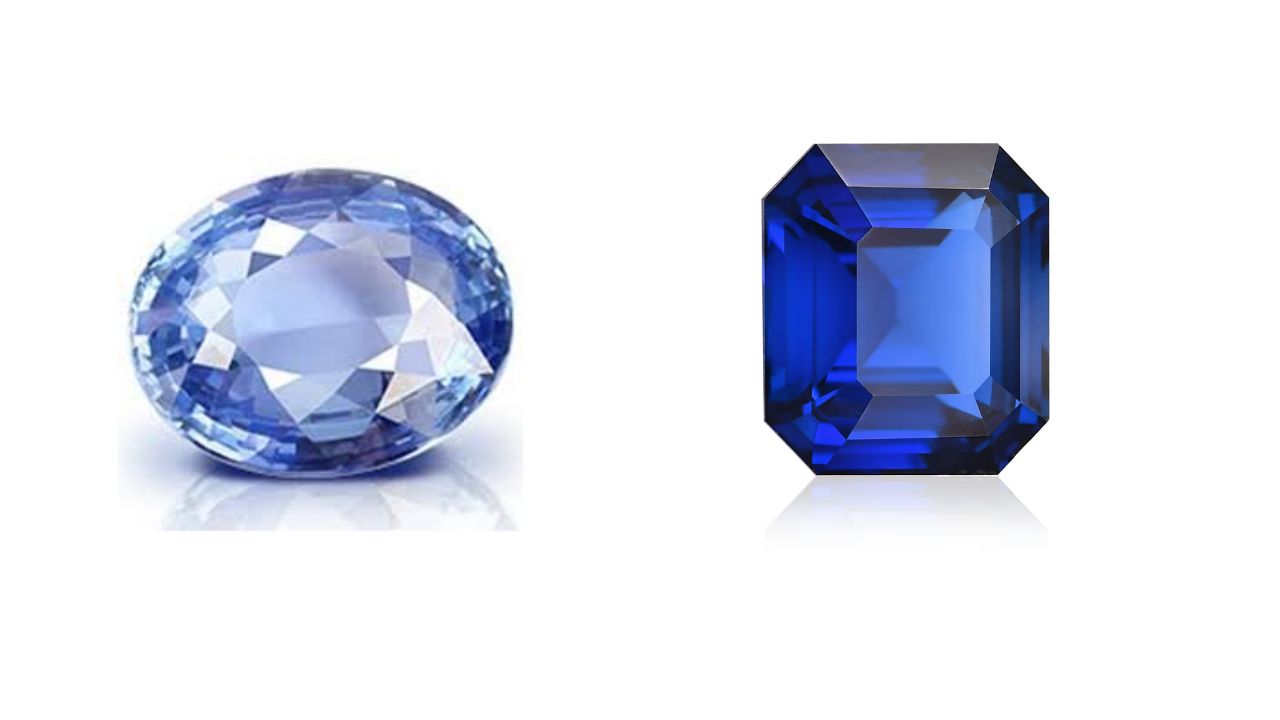
Different pastel blue hues are available in blue sapphires, one of which is a very light shade called “Light Blue,” often referred to as “Silver Blue” or “Sky Blue.” The “Medium Blue,” also known as “Ceylon Blue” or “Water Blue,” has a brighter, medium blue tone and is characterised by high brightness and luminosity in a light, pastel blue tone.
When the colour is more intense, it generally has a delicate violet-blue tint that is commonly referred to as “Cornflower Blue.” The royal deep blue colour known as “Royal Blue” and the velvet blue’s yet strong blue tone, “Vivid Blue,” are both described as having a vivid appearance while having a very dark blue hue and are both recognised for their magical effects on stones. Sapphires that lack life and are excessively dark blue or blue-grey are of lower grade. It is important to consider the differences between cornflower blue and royal blue, the two traditional colours of blue sapphires, as well as a few other, though less frequent, names for blue hues that may be purchased.
The regal jewel known as a blue sapphire stands for riches, power, and traditional taste. The enticing blue tint of blue sapphire, which ranges from a deep midnight sky to a bright cornflower blue, has fascinated civilizations for millennia. This gemstone’s velvety blue hue has charmed monarchs and other members of the aristocracy throughout history, giving it the nickname “gem of kings.”
The corundum mineral family, which also includes rubies, includes blue sapphire, which is mined in a variety of places across the globe, including Madagascar, Sri Lanka, and Myanmar. One of the most well-known blue sapphires is the 563-carat Star of India, which is preserved in the American Museum of Natural History in New York City.
Blue sapphire is prized for its excellent durability in addition to its seductive beauty. This gemstone has a Mohs hardness grade of 9, making it one of the toughest substances on earth. Because of its resistance to scratches, it is ideal for use in expensive jewellery and timepieces that are meant to last a lifetime.
In addition to its physical attributes, blue sapphire is also regarded to have mystical and healing properties. It has a connection to the throat chakra and is said to promote calm, mental clarity, and intuition. It is widely used as a sign of devotion and dedication in engagement rings and is also said to represent loyalty, wisdom, and honesty.
Therefore, whether you’re searching for a gemstone that is unmatched in beauty and elegance or one that brings with it centuries of history and meaning, blue sapphire is one that won’t let you down. Let its stunning blue hue and unmatched hardness adorn you with regal dignity and elegance.
Light blue Sapphire gemstone:
When it comes to sapphires that are light blue, Sri Lankan stones set the standard for beauty and quality. The finest grade of sapphire currently available, these stones are known for their mesmerising colour dispersion and mild to medium tone. Light blue sapphires are ideal for people who like the understated allure of baby blue since their delicate colour is often bluer and more intense than that of other blue sapphires. They have a special iridescence that, depending on the angle of light, reflects various blue hues.
Even though light blue sapphires are often less saturated than dark blue sapphires, customers who like a more subdued aesthetic frequently choose them. Both informal and formal settings are ideal for their soft and delicate look. Exclusive choices for collectors and enthusiasts alike are light blue sapphires.
Light blue sapphires from Sri Lanka are a little bit paler in hue than those derived from Madagascar and Thailand (Kanchanaburi). Even yet, they are still regarded as being of the best grade and are often used in elaborate jewellery designs. They are also renowned for having exceptional clarity, which enables them to exhibit their beauty undisturbed by other visual cues.
Sri Lankan light blue sapphires are evidence of the beauty and scarcity of this gemstone. While their high-quality composition makes them a rare option for collectors and connoisseurs, their soft and delicate appearance makes them a popular choice for people who want a more understated aesthetic. A light blue sapphire from Sri Lanka is a great option if you’re seeking for a jewel that radiates elegance and refinement.
Dark blue sapphire gemstone:
Dark blue sapphire is one of the most well-liked tones in the vast spectrum of sapphire colours. These gemstones are widely sought after by both gemstone collectors and jewellery aficionados because of their deep, rich hue. Dark blue sapphires, which are more vibrant and saturated than lighter colours, are most often linked to conventional and classic sapphire colouring.
Due to its deep blue hue and velvety texture, Kashmir dark blue sapphires in particular are regarded as the most precious and uncommon kind of sapphire. These precious stones come from the isolated Kashmir area of northern India, where in the late 1800s the best sapphires were found. Because titanium and iron are included in the mineral constitution, Kashmir sapphires have a deep blue hue, giving them a distinctive and unmatched beauty.
In addition to Kashmir, Madagascar and Thailand’s Kanchanaburi area also provide dark blue sapphires that are prized for their royal blue tones. The majority of these sapphires, however, tend to be a little bit deeper than the typical cornflower blue. In the future, Kanchanaburi sapphires will be harder to find since the majority of their mines have been exhausted. The most valuable blue sapphires are velvety blue to violet-blue stones with medium to medium-dark overtones. These qualities make these sapphires the most costly per carat.
Despite the great value of dark blue sapphires, not all blue hues are made equal. Less appealing blue sapphires might be those that are too light, too dark, or have a greyish tinge. The clarity of a dark blue sapphire also affects its price since imperfections may detract from its all-around appeal and durability. Dark blue sapphires with no inclusions or just slight flaws that can only be seen up close are the most expensive ones.
Dark blue sapphires, especially Kashmir sapphires, are cherished possessions for both gemstone collectors and jewellery aficionados due to their rich and deep hue. They offer value to any collection or item of jewellery due to their scarcity, vibrant colour, and distinctive features.
Let’s dive into their differences
Sapphires are a variety of mineral corundum and come in a range of colours, including blue, pink, yellow, green, and more. The difference between light blue sapphire and dark blue sapphire lies primarily in their colour intensity and saturation.
| Light Blue Sapphire | Dark Blue Sapphire |
| Composition: Less iron and titanium are present in light blue sapphire, giving it a more delicate, pale colour. | Composition: Due to its increased iron and titanium content, dark blue sapphire has a rich, vivid colour. |
| Colour: Even though light blue sapphires are often distinguished by their vivid, brilliantly coloured hue, there are several hues and variants of this lovely gem, including Sky Blue, Cornflower Blue, Baby Blue, Powder Blue, Aquamarine Blue, and Teal Blue. | Colour: Because of its deep, rich colour, which emanates wealth and refinement, dark blue sapphires are highly prized. Dark blue sapphires are most often found in the hues and variants of Royal Blue, Navy Blue, Midnight Blue, Steel Blue, and Indigo Blue. |
| Value: Due to the fact that they more frequently have inclusions than dark blue sapphires, light blue sapphires might have a lower value. | Value: Due to its greater rarity and popularity, dark blue sapphire is often more expensive than light blue sapphire. In the gemstone industry, dark blue sapphire, sometimes known as “royal blue,” may attract high prices. |
| Price: Light blue sapphires are often cheaper than dark blue sapphires. This is due to the fact that darker sapphires, which are highly prized by collectors and gem experts, are often more uncommon and precious than light blue sapphires. Without respect to colour, a sapphire’s cut and clarity may also affect its price. | Price: The vivid and rich colour of dark blue sapphires, which may vary from a deep navy blue to a velvety midnight blue, makes them very sought-after gemstones. Due to their scarcity and the desire for their rich, intense colour, these sapphires are sometimes more costly. As they are often used in expensive jewellery items and engagement rings, dark blue sapphires have come to represent richness and refinement. |
| Origin: Light blue sapphires are more widely available and may be found in many different places. One of the biggest producers of light blue sapphires, which are prized for their vivid, pastel blue hue, is Sri Lanka. Australia, Tanzania, and other countries across the globe also have light blue sapphires. | Origin: One place, in particular, stands out above the others when it comes to dark blue sapphire: Kashmir. Due to their unique colour and purity, Kashmiri sapphires are among the rarest and most expensive in the world. After being found in the late 19th century, the Kashmir mines immediately emerged as a significant supplier of fine sapphires, especially those with a rich, velvety blue hue. |
| Rarity: Since it is more widely available, light blue sapphire is often used as an alternative to more costly blue gemstones like blue diamonds or dark blue sapphire. | Rarity: In general, dark blue sapphire is said to be more uncommon than light blue sapphire. This is due to the fact that the existence of trace elements in the mineral corundum, which affect sapphire’s colour, may affect the deposit’s concentration of these elements. |
| Treatment: Heat treatment is often used on light blue sapphires to enhance their colour and increase their marketability. The process might result in a blue colour that is more vivid and dazzling, which is greatly desired in the jewellery business. In reality, the majority of light blue sapphires on the market today have undergone some kind of heat treatment. | Treatment: On the other hand, dark blue sapphires seldom undergo heat treatment. This is due to the fact that the deep, velvety blue hue of these gemstones is highly regarded in their untreated form, and any alteration might possibly reduce its worth and desirable qualities. |
| Inclusions: They often have more transparency than their dark blue counterparts, which makes it simpler for light to pass through them. However, because of their transparency, inclusions—minor flaws in the stone caused by nature—are also more likely to occur. Light blue sapphire inclusions may be anything from tiny needles to clouds or feathers. Some of these imperfections provide a special visual appearance called “silk,” which may actually heighten the gem’s attractiveness. | Inclusions: They often have a deeper, more vivid colour and are less translucent than light blue sapphires. Their additions are often bigger and more obvious, although this isn’t always a negative thing. In fact, the inclusions in certain dark blue sapphires are so unusual and one-of-a-kind that they raise the stone’s value. For instance, a dark blue sapphire with a “star” inclusion, which appears to be a six-pointed star when illuminated, is very uncommon and expensive. |
| Refractive index: Relative to other gemstones, light blue sapphires generally have a refractive index between 1.757 and 1.779. Light blue sapphires have a bright, vibrant look with excellent clarity and a dramatic play of colour because of this high refractive index. | Refractive index: The refractive index of dark blue sapphires is often lower than that of light blue sapphires. A softer, more velvety surface with less sparkle and brightness is the consequence of the lower refractive index. |
Conclusion
Light blue sapphire and dark blue sapphire are two unique gemstones that differ in composition, colour, value, rarity, origin, treatment, and clarity. Light blue sapphires have a more vibrant blue tone, are frequently less saturated than darker blue sapphires, and seem more delicate and subtle. Dark blue sapphires, on the other hand, have a richer and deeper hue, more vibrant colour, and more saturation, making them look more classic and conventional.
Kashmir dark blue sapphires are the most costly and uncommon sapphires owing to their velvety blue to violetish blue stones with medium to medium-dark overtones. Sri Lankan sapphires are also highly valued for their uneven distribution of colour across the gemstone and their mild to medium tone. In general, the rarity, quality, and demand of a sapphire dictate its value and cost. Light blue and dark blue sapphires each have their own distinct beauty and are highly prized by gemstone aficionados and collectors.
