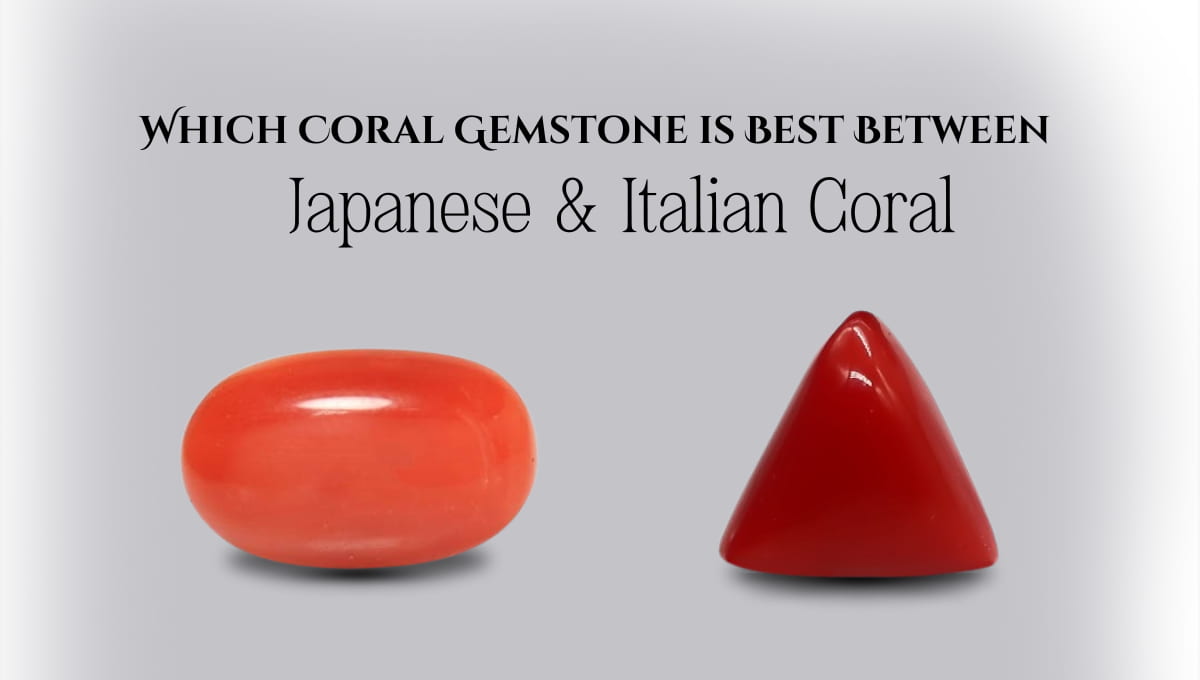
The cosmos of gemstones is so enormous and vivacious that the sheer variety in a single gemstone can boggle your mind. Red coral aka natural moonga stone is one shining example among precious gemstones that transcendence allure and charm by leaps and bounds. Coral is one of the most extraordinary precious gemstones carved by the living organisms coral polyps within the deep sea. These organisms are marine creatures with capacity to produce multiple finest quality corals over the years.
Natural red coral stone comes in a plethora of shapes, sizes, colors, and origin. When it comes to origin, Italian red coral & Japanese red coral are two predominant qualities as well as the most sought after ones. Japanese red coral’s fine texture and durability make it a favored material for intricate carvings and high-end jewelry.
On the other hand, Italian red coral, often referred to as “Sardinian coral,” is sourced from the Mediterranean Sea, particularly around the coasts of Italy and Tunisia. Italian red coral is celebrated for its slightly lighter and more varied red hues, which range from deep crimson to pale pink. This variety offers a broader spectrum for jewelry design and appeals to those who appreciate subtle differences in color. Italian red coral is also known for its historical significance, having been used in Mediterranean cultures for centuries as a symbol of protection and good fortune.
Both types of red coral hold their own unique appeal, making the choice between Japanese and Italian red coral largely a matter of personal preference and the specific qualities one desires in original coral stone jewelry or art pieces. Let’s dive in fine detail that distinguishes these two gemstones from each other.
Read Worthy: – Side Effects of Wearing Red Coral
Japanese Red Coral vs Italian Red Coral: Origin
Japanese Red Coral:
Primarily found in the Pacific Ocean, primarily off the coasts of Japan.
Main harvesting areas include waters near Kochi Prefecture and the Ogasawara Islands
Italian Red Coral:
Found mainly in the Mediterranean Sea.
Historically harvested near the coasts of Italy, particularly Sardinia, Sicily, and the Ligurian Sea.
Both types are precious Corallium species, but they come from different ocean environments. The specific conditions in these waters contribute to slight variations in color, hardness, and other characteristics between Japanese and Italian red coral.
Don’t Miss: – Red Coral vs White Coral
Japanese Red Coral vs Italian Red Coral: Symbolism & Cultural Significance
Japanese red coral, known as “Aka coral,” holds a revered place in Japanese culture. Traditionally, it symbolizes protection, prosperity, and good fortune. The rich red color of Aka coral is associated with vitality and life force, making it a popular choice for talismans and amulets intended to ward off evil spirits and misfortune. In Japanese folklore, coral is also believed to promote happiness and longevity, often being used in heirloom jewelry passed down through generations. The spiritual and protective qualities attributed to Japanese red coral have made it an integral part of various ceremonies and traditional practices.
Italian red coral, or “Sardinian coral,” has been cherished in Mediterranean cultures for millennia. In ancient Roman and Greek societies, it was thought to possess protective powers, particularly for children, and was often fashioned into amulets and charms. The coral’s vibrant red hue was linked to Mars, the god of war, symbolizing strength and courage. Throughout history, Italian red coral has been used in religious artifacts and as a symbol of wealth and status. In modern times, it continues to be a symbol of good luck and protection, often used in Mediterranean jewelry and art.
Japanese Red Coral vs Italian Red Coral: Color
Japanese Red Coral: Renowned for its deep, rich “Ox Blood” color, considered the most desirable shade. It can also exhibit lighter shades of red, pink, and even white.
Italian Red Coral: Typically showcases a uniform, deep red hue due to higher iron oxide content. It’s known for its consistent coloration.
Also Read: – How To Clean & Take Care of Red Coral
Japanese Red Coral vs Italian Red Coral: Price Comparison
Japanese coral is significantly more expensive than Italian coral.
Think of it like comparing a common apple to a rare, exotic fruit. Italian coral is the common apple, widely available and relatively affordable. It’s a popular choice for many due to its attractive color and accessibility.
On the other hand, Japanese coral is the exotic fruit. Its rarity drives up the price considerably. It’s often prized for its unique color variations and superior quality, making it a coveted choice for those seeking a truly exceptional piece of jewelry.
While the exact price difference can vary based on factors such as size, color, and quality, it’s generally accepted that Japanese coral can be up to ten times more expensive than its Italian counterpart.
So, if you’re looking for a beautiful coral piece without breaking the bank, Italian coral is a great option. But if you desire a truly exclusive and luxurious gem, Japanese coral might be the perfect choice.
Japanese Red Coral vs Italian Red Coral: Craftsmanship
Italian Coral Jewelry is renowned for its intricate designs and masterful craftsmanship, honed over centuries. Italian artisans skillfully carve coral into exquisite pieces, often adorned with precious metals and gemstones.
Japanese Coral is celebrated for its delicate beauty and meticulous attention to detail. From traditional art forms like netsuke and kanzashi to ornate samurai helmet decorations, Japanese craftsmen showcase their unparalleled artistry in coral.
Check Out: – Benefits of Triangular Moonga Stone
