The dazzling and unfathomable world of gemstones is packed with numerous marvels, and citrine stone is certainly one of them. Widely referred to as Sunela stone, a natural citrine is one of the most significant upratans in gemology and the top substitute of the yellow sapphire gemstone. Citrine stone is generally recommended by astrologers to those individuals who are unable to rope in natural pukhraj stones due to budget constraints.
Generally, the term citrine is derived from the French word ‘Citron’. It is an integral variety of the quartz mineral family and one of the most sought-after yellow color gemstones. When purchasing a striking stone like Sunela, one of the basic concerns of gemstone lovers is how to identify original citrine gemstone effortlessly. As the market is full of scamsters who sell glass-filled and treated citrine stones, it becomes daunting for individuals to identify the original ones among the heaps of fake stones. In this all-inclusive blog post, we have jotted down all the crucial pointers one must know to identify an original citrine stone in no time. Moreover, we have also stated how to wear citrine astrologically.
Different Ways To Identify Original Citrine
1. Examine the Color of Citrine
Color is the first and foremost, and the most immediate indicator for finding citrine’s authenticity. Natural citrine typically exhibits:
Soft, Pale Hues: Genuine citrine gemstone often has a light lemon-yellow to golden hue, sometimes with a slightly greenish or smoky undertone. The color is usually subtle and evenly distributed.

Bookmark Worthy: – Yellow Sapphire Vs Citrine
No Intense Orange or Reddish Tones: Vibrant orange or reddish-brown citrine is almost always heat-treated amethyst or smoky quartz. These treated stones often have an unnatural, burnt appearance.
Dichroism: Natural citrine may show weak dichroism (displaying two slightly different colors when viewed from different angles). Use a dichroscope to check for this property if available.
What to Watch For:
- Uniform, overly vivid orange or reddish hues suggest heat treatment.
- A sharp color change or zoning (distinct bands of color) may indicate treatment or synthetic origin.
2. Check for Clarity and Inclusions
Natural citrine is typically clear with few inclusions, though minor natural imperfections may be visible under magnification. Examine the stone under a loupe (10x magnification) or microscope:
Natural Inclusions: Genuine citrine may have tiny feather-like inclusions, liquid inclusions, or small crystal cavities formed during its natural growth.
Bubbles or Swirls: The presence of gas bubbles or swirl-like patterns often indicates glass or synthetic imitations.

Heat-Treatment Signs: Treated citrine may show color zoning, with darker color concentrated near the edges or tips, or small, irregular cracks from the heating process.
Additional Tip: If the stone is flawless and overly transparent, it might be synthetic quartz or glass. Natural stones rarely lack all imperfections.
Read Worthy: – Can I Wear Amethyst And Citrine Together
3. Assess the Cut and Shape
Citrine’s cut can provide clues about its authenticity:
Natural Citrine: Often cut to maximize its natural beauty, with faceted stones showing even proportions and good symmetry. Rough citrine crystals may have a natural hexagonal shape with striations along the prism faces.
Treated or Synthetic Stones: Poorly cut stones or overly polished surfaces may indicate attempts to mask imperfections or enhance color artificially.
Inspect the edges and facets for signs of wear. Genuine citrine, with a Mohs hardness of 7, should resist minor scratches but may show wear if mishandled.
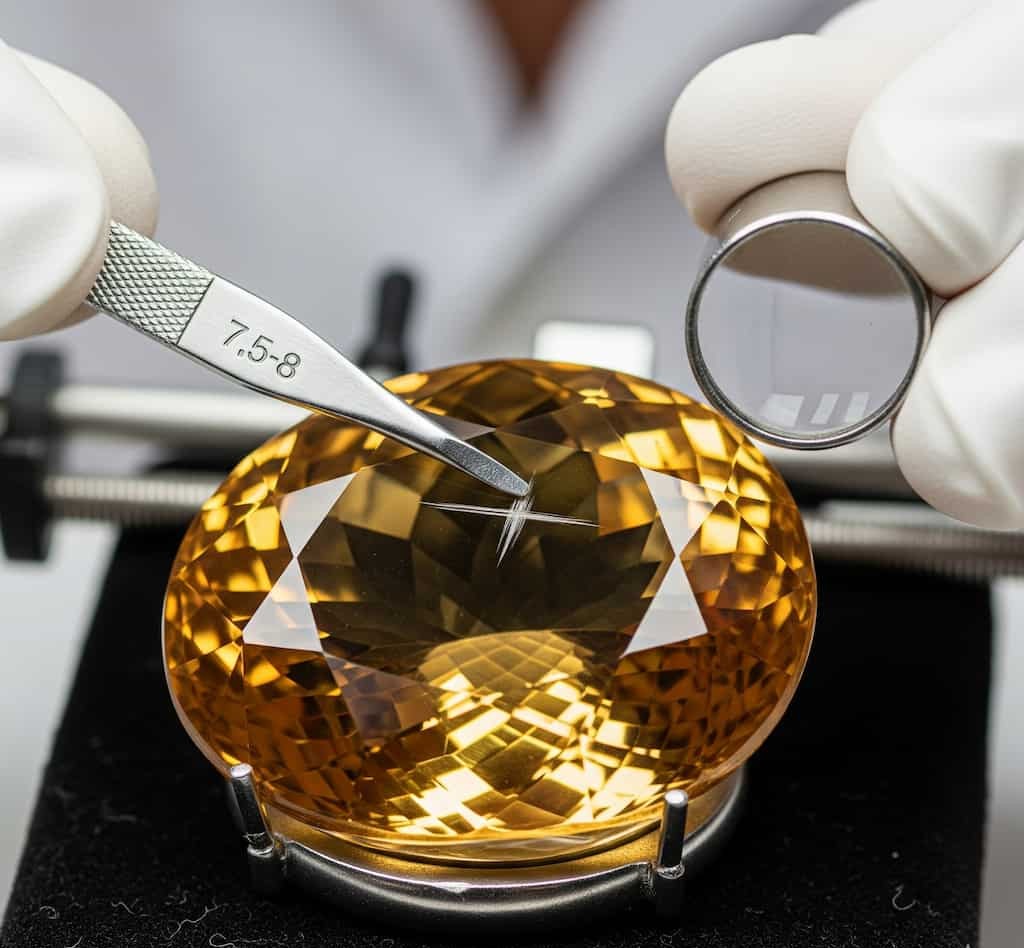
4. Test Hardness
Citrine’s Mohs hardness of 7 means it can scratch glass but will be scratched by harder materials like topaz (8) or sapphire (9). To test:
Gently rub the stone against a piece of glass. A genuine citrine should leave a scratch on the glass surface.
Try scratching the stone with a steel knife (hardness ~5.5). Citrine should resist scratching.
Caution: Avoid aggressive testing that could damage the stone or setting, especially in jewelry.
Don’t Miss: – Citrine Stone Benefits & Healing Properties
5. Evaluate Weight and Density
Citrine has a specific gravity of approximately 2.65, typical of quartz. While precise measurement requires a hydrostatic balance, you can perform a basic comparison:
Compare the stone’s weight to a known piece of quartz or glass of similar size. Glass imitations (specific gravity ~2.4–2.5) may feel slightly lighter.
If the stone feels unusually heavy, it could be a denser material like synthetic sapphire or topaz.
6. Look for Fluorescence
Under ultraviolet (UV) light, citrine may exhibit weak fluorescence or none at all. Some natural citrine glows faintly yellow or orange, while treated or synthetic stones may show inconsistent or strong fluorescence. Use a UV flashlight in a dark room to check:
- No or Weak Fluorescence: Common in natural citrine.
- Strong Blue or Green Glow: Suggests synthetic material or glass.
7. Check for Thermal Conductivity
Gemstones conduct heat differently than imitations. A thermal conductivity tester (commonly used for diamonds) can help distinguish citrine from glass or plastic. Quartz has moderate thermal conductivity, while glass conducts heat more slowly.
Also Read: – Do Emeralds and Citrine Attract Money
8. Inspect the Source and Documentation
When purchasing citrine, inquire about its origin and request certification:
Natural Sources: Citrine is mined in Brazil, Madagascar, Russia, Bolivia, and Uruguay. Stones from reputable sources are more likely to be authentic.
Certification: A gemological certificate from a trusted lab (e.g., GIA, IGI, or AGS) confirms whether the stone is natural, treated, or synthetic. Certificates detail color, clarity, and any treatments applied.
Seller Transparency: Reputable sellers disclose whether the citrine is natural or heat-treated. Be wary of vendors claiming all their citrine is “natural” without documentation, as most commercial citrine is treated.
9. Perform Advanced Testing (If Needed)
For definitive identification, consult a professional gemologist or use advanced tools:
Refractometer: Measures the refractive index (1.544–1.553 for citrine). Glass and synthetics will show different values.
Spectroscope: Natural citrine shows a weak absorption spectrum with lines in the blue region due to iron. Treated stones may lack these lines or show different patterns.
Polariscope: Citrine is doubly refractive, displaying a characteristic “blink” when rotated under a polariscope.
Chelsea Filter: Under a Chelsea filter, natural citrine typically appears pale yellow or greenish, while treated amethyst may show a reddish hue.
These tests require specialized equipment and expertise, so consider visiting a certified gemologist if you’re unsure.
Conclusion
Identifying an original citrine requires a combination of visual inspection, understanding of gemological properties, and awareness of market practices. While most citrine available today is heat-treated quartz (still genuine), true natural citrine is a rare and prized gemstone.
By learning to recognize its color, clarity, hardness, and other traits — and by being cautious of imitations — you can make informed decisions and appreciate the authentic beauty of this radiant gem. Whether you’re buying for investment, healing purposes, or fashion, always prioritize transparency, ask questions, and when in doubt, seek expert evaluation. With knowledge and vigilance, you can confidently enjoy the golden glow of a genuine citrine.
Check Out: – Citrine vs Yellow Topaz
