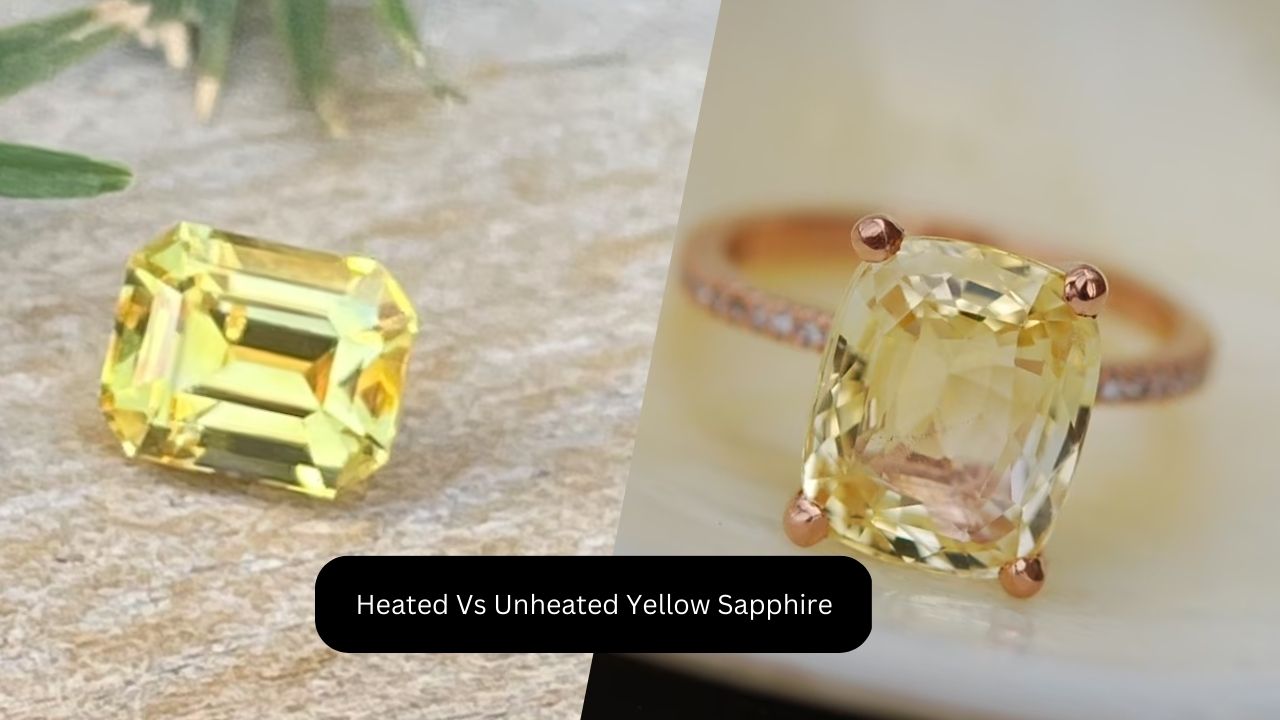
Yellow sapphire is a highly sought-after gemstone that has been treasured for centuries. It is valued for its beautiful yellow hue, excellent hardness, and durability. However, there are two types of yellow sapphire available in the market, heated and unheated. Heated yellow sapphire is treated with heat to enhance its colour and clarity, while unheated yellow sapphire is left in its natural state. In this article, we will explore the differences between heated and unheated yellow sapphires, including their appearance, value, and authenticity, to help you make an informed decision when choosing a yellow sapphire gemstone.
Heated Yellow Sapphire
Yellow sapphire is a precious gemstone that belongs to the corundum mineral family, which also includes ruby. The yellow sapphire is known for its beautiful yellow colour and excellent clarity. When a yellow sapphire is heated, its colour and clarity can be improved or altered. Heating yellow sapphire is a common practice in the gemstone industry. The process involves exposing the stone to high temperatures to remove any impurities or enhance its colour. The heat treatment process can result in a more vibrant and intense yellow colour, making the gemstone more valuable. The heating process is carefully controlled to prevent damage to the gemstone. The temperature is gradually increased and maintained for several hours until the desired colour is achieved.
The gemstone is then slowly cooled to prevent any cracks or fractures from forming. Heated yellow sapphires are widely available in the market and are often preferred over their unheated counterparts due to their enhanced colour and clarity. However, it is important to note that not all yellow sapphires are suitable for heat treatment, and the process can affect the value of the gemstone. When purchasing a heated yellow sapphire, it is important to seek the advice of a reputable gemstone dealer or a gemologist who can provide information on the quality and origin of the stone. With proper care and maintenance, a heated yellow sapphire can last for generations, making it a valuable addition to any jewellery collection.
Unheated Yellow Sapphire
Yellow sapphire is a precious gemstone that belongs to the corundum mineral family, just like Ruby stone and blue sapphire. It gets its yellow colour from the presence of iron and titanium in the crystal structure. The gemstone is also known as Pukhraj in Hindi. Unheated yellow sapphire refers to a natural and untreated variety of gemstones. This means that the stone has not been subjected to any heat treatment or artificial enhancement to improve its colour or clarity. Unheated yellow sapphires are considered to be of the highest quality and are highly valued in the gemstone market. Unheated yellow sapphire is usually found in Sri Lanka, Madagascar, Tanzania, and Thailand.
The gemstone is known for its brilliant yellow colour, which can range from pale lemons to deep golden hues. The colour intensity of the stone is a primary factor in determining its value, with brighter and more vivid colours being more valuable. The clarity of unheated yellow sapphire is also an essential factor in determining its value. The gemstone should ideally be free of any visible inclusions or flaws, as these can affect the stone’s transparency and brilliance. However, some minor inclusions are acceptable in natural gemstones and can give them a unique character. Unheated yellow sapphire is believed to have several metaphysical properties and is often associated with the planet Jupiter. According to astrologers, wearing yellow sapphire can bring prosperity, good luck, and success to the wearer. It is also said to promote wisdom, knowledge, and spiritual enlightenment.
Difference Between Heated Vs Unheated Yellow Sapphire
| Heated Yellow Sapphire | Unheated Yellow Sapphire |
| Benefits: Yellow sapphires have been subjected to high temperatures to improve their colour and clarity. heated yellow sapphires may have a lighter or darker colour due to the treatment process, which may affect their astrological benefits. Heated yellow sapphires may have more inclusions due to the treatment process, which may affect their astrological properties. The astrological benefits of a yellow sapphire ultimately depend on the individual’s horoscope, and each stone must be evaluated on its individual merits. It’s essential to consult a qualified astrologer before wearing a yellow sapphire or any other gemstone for astrological purposes. So heated yellow sapphires can be still considered. | Benefits: Unheated yellow sapphires are natural gemstones that haven’t been treated or enhanced in any way, Astrologers believe that unheated yellow sapphires possess more natural energy and are, therefore, more effective for astrological purposes than heated ones. Unheated yellow sapphires have a more intense and natural colour, which astrologers believe enhances their powers. Unheated yellow sapphires with minimal inclusions are believed to have a stronger positive influence, as they are considered purer and more powerful. Astrologers believe that larger stones with higher carat weight have a more powerful and positive effect on the wearer. However, unheated yellow sapphires with lower carat weights are still believed to be effective if they are of high quality and purity. Unheated yellow sapphires are generally more expensive than heated ones due to their rarity and natural properties. However, astrologers believe that the price of yellow sapphire is not necessarily indicative of its astrological effectiveness. They believe that the power of the gemstone is in its natural energy and purity, rather than its cost or value. |
| Price: Heated yellow sapphires are typically less expensive than unheated ones due to their treatment history. Heat treatment is a common practice in the gemstone industry to enhance the colour and clarity of gemstones. This process involves subjecting the gemstone to high temperatures to remove any impurities, improve the colour saturation, and create a more desirable appearance. | Price: Unheated yellow sapphires, on the other hand, are considered to be rare and highly valuable due to their natural properties. They have not undergone any treatment, and their colour and clarity are entirely natural. This rarity and natural beauty make unheated yellow sapphires more expensive than their heated counterparts. |
| Value: Heated yellow sapphires are more common and less valuable than unheated ones because they have undergone treatment processes to improve their colour and clarity. Heat treatment can improve the appearance of the gemstone by removing impurities and enhancing the colour saturation. Heated yellow sapphires are typically less expensive than unheated ones because they are more widely available and have undergone treatment processes that reduce their rarity and natural properties.The value of a heated yellow sapphire depends on the quality of the treatment process and the overall quality of the gemstone, including factors such as colour, clarity, and carat weight. | Value: Unheated yellow sapphires are rare and highly valued in the gemstone market due to their natural properties. Their colour and clarity are entirely natural and have not been enhanced or modified by any treatment processes. They are considered to be more valuable than heated yellow sapphires because of their natural beauty and rarity. Unheated yellow sapphires with exceptional colour, clarity, and carat weight can fetch high prices in the market. |
| Appearances: Heated yellow sapphires have a more uniform colour and higher clarity than unheated ones. Heat treatment can enhance the gemstone’s colour and clarity by removing impurities and enhancing colour saturation. The colour of heated yellow sapphires is typically more vibrant and saturated than unheated ones. Heated yellow sapphires may have fewer visible inclusions due to the heat treatment process. | Appearances: Unheated yellow sapphires have a unique and natural appearance with inclusions that can enhance their character and beauty. The colour of unheated yellow sapphires is entirely natural and has not undergone any enhancement processes. They can have a wide range of colours, from pale yellow to deep golden hues. Their clarity can vary, with some specimens having visible inclusions that can affect their value. |
