In the realm of gemstones, sapphires have always been the source of awe, allure, magnificence, and immense value. Sapphires belong to the big 4 of the gemstone world, the other three being: emeralds, rubies, and diamonds. Out of all, sapphires are the most revered and fabled ones as they are abundant in existence and carry profound astrological significance.
Treatment of gemstones is an indispensable part when it comes to augmenting their appearance and make them market-ready. However, when choosing the perfect sapphire, one crucial decision stands out: heated or unheated? This distinction goes beyond mere aesthetics and dives into the heart of the gemstone’s origin, value, and authenticity. Heated sapphires, treated to enhance their color and clarity, offer a dazzling, uniform appearance that appeals to many. On the other hand, unheated sapphires, untouched by modern processes, are rare treasures that showcase the gemstone’s natural beauty and individuality. This choice isn’t just about preference—it’s a reflection of your priorities as a gemstone enthusiast or collector.
Are you drawn to the vivid brilliance of a treated stone, or do you value the rarity and raw appeal of an unaltered gem? Each type has its own story, allure, and place in the world of fine jewelry. In this article, we’ll delve deep into the differences between heated and unheated sapphires, exploring their formation, market value, and how to choose the one that perfectly aligns with your desires. Whether you’re shopping for an engagement ring, an heirloom piece, or simply seeking to expand your knowledge, this guide will help you uncover the hidden truths of these dazzling gems.
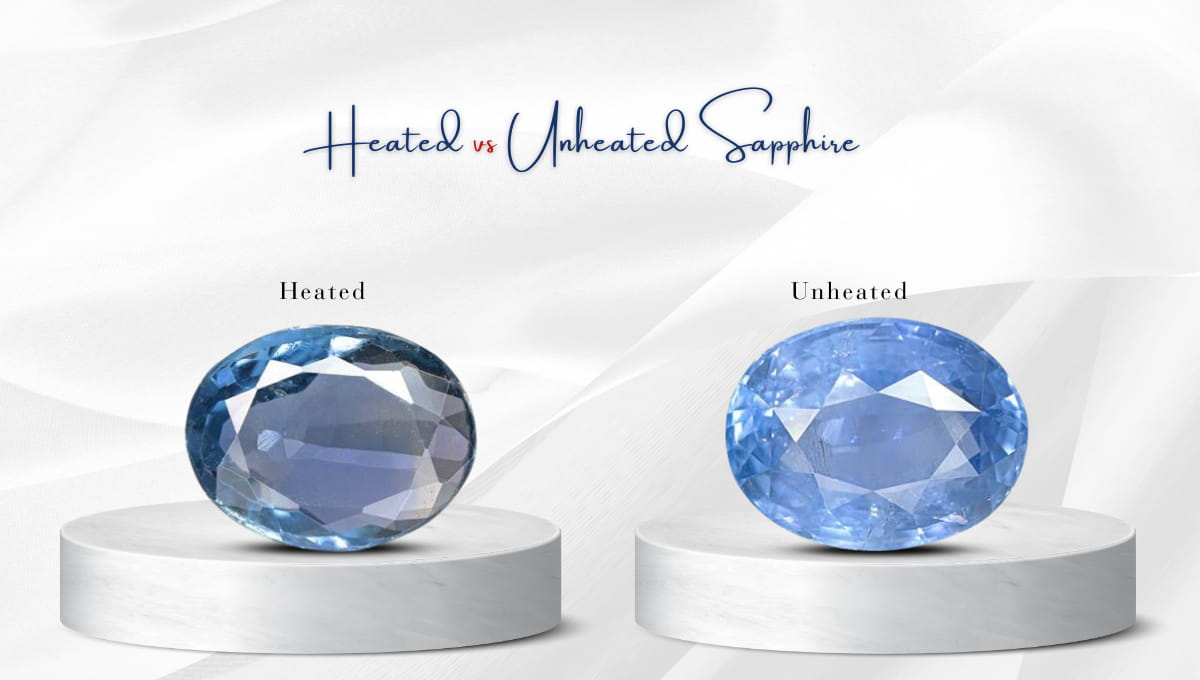
Heated vs Unheated Sapphire: Appearance
Heated and unheated sapphires exhibit distinct visual characteristics that can significantly impact their appearance and value. Unheated blue sapphires typically display more subtle, softer colors with a slightly cloudy or silky appearance due to natural inclusions and rutile needles that create unique internal patterns. These natural stones often show color zoning, where different areas of the gem display varying intensities or hues, lending them a more organic, variegated look. In contrast, heated sapphires generally present more uniform, vibrant, and saturated colors as the heat treatment dissolves the rutile silk and rearranges the crystal structure, resulting in enhanced clarity and color distribution.
The heating process can transform less desirable colors into more marketable blue hues, eliminate unwanted color zoning, and improve overall transparency. While heated stones may appear more commercially appealing with their consistent coloring and greater clarity, unheated sapphires are often prized by collectors and connoisseurs for their natural beauty, rarity, and unique characteristics that tell the story of their formation. The presence of intact rutile silk in unheated sapphires can also create desirable phenomena like asterism (the star effect), which is typically lost in heated stones. The internal features of unheated sapphires, such as intact crystal inclusions and growth structures, serve as valuable indicators of their natural state and can be used by gemologists to authenticate their unheated condition.
Don’t Miss: – Different Types of Sapphires
Heated vs Unheated Sapphire: Market Value
Heated sapphires, while less valuable than unheated ones, are still considered natural gemstones. Heating enhances their color and clarity, making them more appealing but less rare. Unheated sapphires, on the other hand, retain their natural beauty and are prized for their rarity and authenticity. While heated yellow sapphires offer a more affordable option for those seeking the beauty of sapphires, unheated sapphires are often favored by collectors and connoisseurs who appreciate their natural state. Ultimately, the value of a sapphire depends on various factors, including its color, clarity, cut, and whether it has been heated or not.
Heated vs Unheated Sapphire: Technical Differences
Treatment Process
Heated Sapphires: Undergo high-temperature treatment, typically between 1600°C and 1800°C. This process enhances color, improves clarity by dissolving inclusions, and eliminates color zoning.
Unheated Sapphires: Are left in their natural state, without exposure to heat or other artificial treatments. Their color and clarity remain as found in the earth.
Also ReAD: – Kashmir Blue Sapphires
Color
Heated Sapphires: Exhibit a more vibrant, saturated, and uniform color due to the heat treatment. This often makes them visually striking.
Unheated Sapphires: Showcase natural color variations and zoning, which may range from subtle to prominent. These features highlight the gem’s untouched nature.
Inclusions
Heated Sapphires: Heat treatment reduces or alters inclusions, making the gem appear cleaner.
Unheated Sapphires: Retain their original inclusions, serving as markers of authenticity and proof of being untreated.
Heated vs Unheated Sapphire: Conclusion
The choice between heated and unheated sapphires ultimately depends on individual preferences, budget considerations, and intended use, with each variety offering distinct advantages. Unheated sapphires command significantly higher prices due to their natural state, rarity, and historical significance, making them particularly appealing to collectors, investors, and those seeking unique, one-of-a-kind gems. These stones often carry greater investment value and are considered more prestigious in the fine jewelry market due to their untreated status.
However, heated sapphires present a practical and accessible alternative for many buyers, offering enhanced aesthetic appeal through improved clarity and color consistency at more affordable price points. While heating is a permanent and widely accepted treatment in the industry, transparency about treatment status remains crucial for ethical trading and consumer trust. Quality heated sapphires can still be excellent choices for jewelry, particularly for those prioritizing visual appeal over investment value or natural purity. The decision often comes down to balancing factors such as budget constraints, aesthetic preferences, investment potential, and personal philosophy regarding gem treatments. For purists and serious collectors, unheated sapphires represent the pinnacle of natural beauty and value, while heated sapphires serve as an excellent option for those seeking beautiful, durable gems with optimized appearance at more moderate price points
Check Out: – Inclusions in Sapphires
