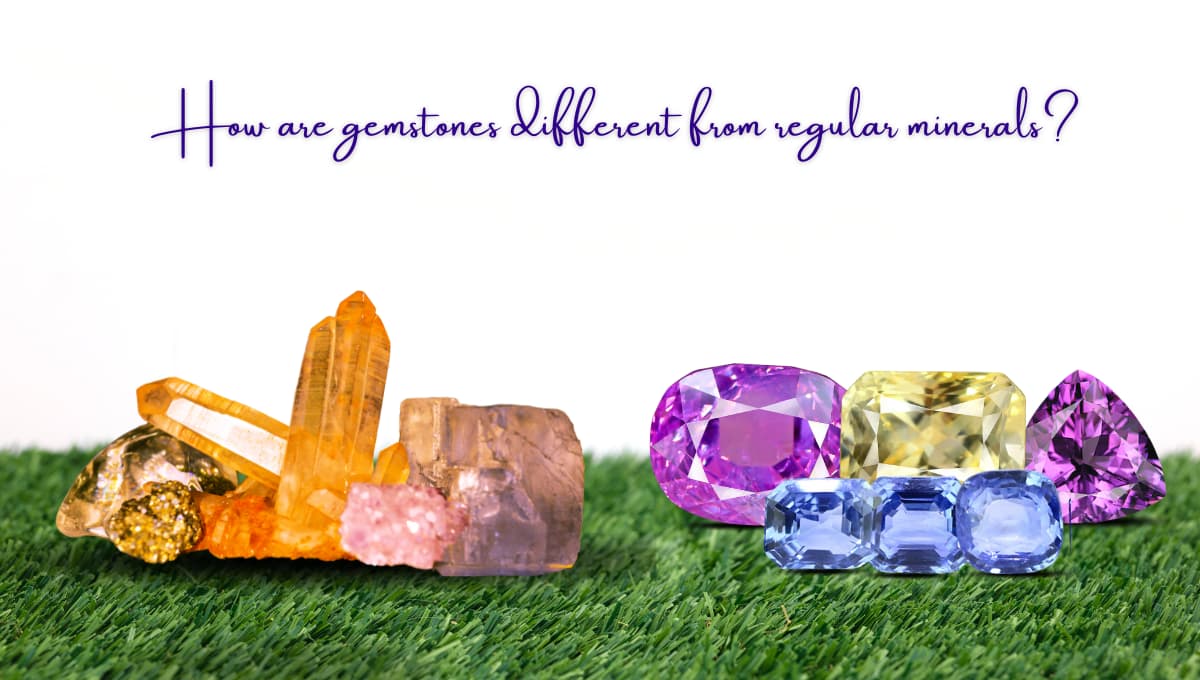
We all are well aware of how gemstones are extracted, cutted, and polished to give them scintillating final form and ready to use for masses. It is also evident that gemstones are derived different mineral types. However, the real dilemma is most people still don’t know the key differences between gemstones and regular minerals.Gemstones differ from regular minerals in several unique ways, primarily based on their rarity, aesthetic appeal, and cultural significance. While all gemstones are minerals, not all minerals qualify as gemstones. Minerals are naturally occurring, inorganic substances with a distinct chemical composition and crystalline structure, found abundantly in the earth’s crust. However, only a small fraction of minerals possess the qualities needed to be classified as gemstones.
Gemstones are valued for their beauty, durability, and rarity, often showcasing vibrant colors, clarity, and unique optical properties. These qualities make gemstones desirable for use in jewelry and decorative pieces, holding cultural and spiritual importance across civilizations. The distinction between gemstones and regular minerals lies not just in their physical properties but also in the value and admiration they garner, influenced by factors like mythology, healing beliefs, and economic worth.
What Are Minerals?
Minerals are naturally occurring, inorganic solids with definite chemical compositions and ordered crystalline structures. These fundamental building blocks of rocks and geological materials form through various natural processes, including crystallization from magma, precipitation from solutions, or biological processes. Each mineral has unique physical properties such as hardness, luster, color, streak, and cleavage, which help in their identification. Common examples include quartz (SiO2), feldspar, mica, calcite, and halite (rock salt).
Minerals play crucial roles in Earth’s processes and human civilization – they are essential components of soil fertility, vital raw materials for manufacturing and construction, important sources of metals and industrial materials, and many have significant economic value as gemstones. They also serve essential biological functions, as many minerals provide necessary nutrients for plant and animal life, such as calcium in calcite for bone formation or iron in hematite for blood production. The study of minerals, known as mineralogy, helps us understand Earth’s history, geological processes, and the formation of valuable resources, while also contributing to technological advancements in fields ranging from electronics to medicine.
Check Out: – Best Heat Resistant Gemstones
What Are Gemstones?
Gemstones are naturally occurring minerals or organic materials prized for their beauty, durability, and rarity.
They are often cut and polished to enhance their visual appeal and used in jewelry or other decorative objects. Gemstones can vary widely in color, clarity, and hardness, with some of the most famous examples including diamonds, rubies, natural blue sapphires, emeralds, and natural opals. While many gemstones are formed through geological processes deep within the Earth, others like pearls and amber originate from living organisms. The value of a gemstone is determined by a combination of factors such as its carat weight, color, clarity, and cut, with rare and exceptionally beautiful stones commanding high prices.
Difference Between Minerals & Gemstones
Gemstones and minerals are often spoken of in similar terms, but the distinction between the two is significant and based on factors like rarity, aesthetic qualities, and cultural importance. Understanding these differences involves exploring their formation, physical properties, and the unique qualities that elevate some minerals to the status of gemstones. In this article, we’ll cover the essential differences, from scientific characteristics to their roles in history and jewelry.
1. Definition and Basic Characteristics
Minerals: Minerals are naturally occurring, inorganic substances with a defined chemical composition and a crystalline structure. They form through geological processes over millions of years and are the building blocks of rocks. Minerals can be found abundantly in the earth’s crust, with thousands of types discovered so far. Common examples include quartz, calcite, and feldspar.
Gemstones: Gemstones, on the other hand, are minerals that possess exceptional qualities such as beauty, rarity, and durability, making them suitable for jewelry or ornamentation. Only a small fraction of minerals qualify as gemstones. To be a gemstone, a mineral must not only be visually appealing but also withstand daily wear and tear.
2. Formation and Geological Processes
Minerals form through various geological processes, including cooling and solidification of molten magma, precipitation from mineral-rich solutions, and the effects of high pressure and temperature. Their formation depends on specific environmental conditions that influence their unique properties.
Gemstones, however, often require even more specific conditions to achieve the clarity, color, and durability that make them desirable. For example, diamonds form under extreme heat and pressure deep within the Earth’s mantle, while opals form from silica deposits within water-rich environments.
Also Read: – Which Gemstones Change Color Other Than Alexandrite
3. Physical and Chemical Properties
Crystalline Structure: Both minerals and gemstones typically have crystalline structures, but gemstones are often sought after for their exceptional crystal clarity and perfection. Regular minerals may not have the same level of purity and are often opaque or have impurities that prevent them from achieving gemstone status.
Hardness and Durability: Gemstones are known for their hardness, which is essential for enduring daily wear. This hardness is usually measured on the Mohs scale. Minerals, however, vary greatly in hardness, and many would not hold up well if used in jewelry. For example, talc is a mineral but is too soft to be a gemstone, whereas sapphire is one of the hardest minerals, making it a desirable gemstone.
4. Aesthetic Qualities: Color, Clarity, and Cut
Color and Clarity: Gemstones are renowned for their vivid and appealing colors, often due to trace elements that influence their hues, like chromium in emeralds or iron in amethysts. Regular minerals, while they can be colorful, often lack the vibrancy or optical properties, such as translucence, needed to be a gemstone.
Cut and Polish: Gemstones are cut and polished to enhance their appearance, bringing out their color and brilliance. Minerals are rarely polished or cut unless they are part of decorative pieces or studied scientifically, as their value does not rely on appearance alone.
5. Rarity and Value
Rarity: One of the key factors that separates gemstones from minerals is their rarity. While minerals are abundant in the Earth’s crust, gemstones are typically scarce and often found in limited geographical locations, adding to their value and desirability.
Market Value: Gemstones tend to be highly valued not only for their beauty but also due to their rarity and cultural significance. Regular minerals generally have economic value for industrial applications, such as quartz in electronics, rather than for ornamental purposes.
6. Cultural and Historical Significance
Gemstones have played a significant role in human culture and history, symbolizing wealth, status, and even spiritual beliefs. Civilizations throughout history, from the Egyptians to the Indians, have attributed metaphysical and healing properties to gemstones. Regular minerals, while significant scientifically, do not typically hold the same level of cultural or symbolic meaning.
7. Uses and Applications
Gemstones: Gemstones are primarily used in jewelry and decorative art, where their beauty and durability can be fully appreciated. They are also used in alternative healing practices, with beliefs in their potential therapeutic benefits.
Minerals: Minerals have a broader range of applications in construction, manufacturing, technology, and science. For example, gypsum is used in drywall, quartz in glassmaking, and lithium in batteries. While some minerals have ornamental uses, they are typically not regarded as precious.
Conclusion
In summary, while all gemstones are minerals, only a select few minerals meet the standards required to be considered gemstones. Gemstones distinguish themselves by their exceptional beauty, rarity, and durability, which make them suitable for jewelry and deeply symbolic across cultures. Minerals, in contrast, serve as the foundation for many industries and technologies, highlighting their immense importance beyond ornamental use. Understanding these distinctions deepens our appreciation of both minerals and gemstones, as they each contribute uniquely to science, art, and human history.
Don’t Miss: – Guide To Gemstone Cutting Styles
