When it comes to gemstones, the yellow color is certainly the most striking, scintillating, and alluring after the red color. Yellow color represents a lot of noteworthy characteristics like warmth, joy, energy, optimism, loyalty, and nobility. Pukhraj gemstone aka natural yellow sapphire leads the pack in the category of yellow color gems as it is the most valuable yellow color gemstone astrologically and monetarily.
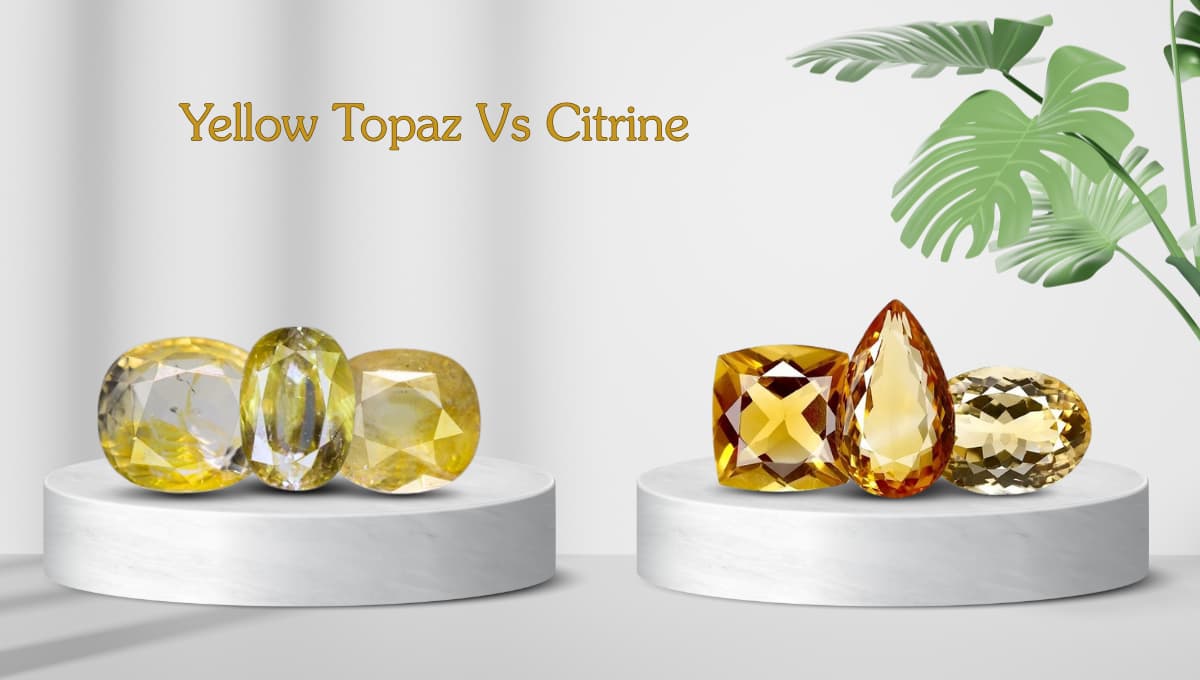
However, not everyone can afford the finest quality yellow sapphire gemstone because even a 1-carat pukhraj gem can make a massive dent in your budget. The best affordable options and substitutes for pukhraj are citrine and yellow topaz gemstones. These are two of the top-notch semi-precious yellow color gems that are worn as alternatives to yellow sapphire and deliver expected astrological benefits or satiate aesthetic appeal when embedded in jewelry. The real tussle begins when you have to choose between citrine and yellow topaz gems for your astrological remedies.
To exterminate your confusion, we have created a comparison guide Citrine vs Yellow Topaz that will help you to evaluate and choose the best gemstone as per your needs. Let’s go through each pointer one at a time.
Citrine vs Yellow Topaz: Origin
Citrine: Citrine is a variety of quartz, one of the most abundant minerals in the Earth’s crust. Its name comes from the French word “citron,” meaning lemon, reflecting its yellow to golden-orange color. Citrine forms naturally in igneous and metamorphic rocks when silica-rich solutions cool and crystallize.
Trace amounts of iron within the quartz structure give the citrine stone its characteristic color. Major deposits of natural citrine are found in Brazil, particularly in the states of Rio Grande do Sul and Minas Gerais, which are key producers. Other notable sources include Spain, Madagascar, Russia, and the United States (e.g., Colorado and North Carolina). Interestingly, much of the citrine on the market today is actually heat-treated amethyst or smoky quartz, as natural citrine is relatively rare.
Yellow Topaz: Yellow topaz, on the other hand, is a silicate mineral composed of aluminum, fluorine, and hydroxyl. Its name is thought to derive from the Sanskrit word “tapas,” meaning heat or fire, or possibly from the ancient island of Topazios (now Zabargad) in the Red Sea, though that island produced peridot, not topaz. Yellow topaz forms in igneous rocks like pegmatites and rhyolites, often in cavities or fractures where fluorine-rich vapors facilitate crystal growth.
The color comes from impurities or defects in the crystal lattice, though some yellow topaz is heat-treated or irradiated to enhance its hue. Brazil, again, is a leading source, particularly the Ouro Preto region in Minas Gerais, known for its rich topaz mines. Other significant deposits are found in Russia (Ural Mountains), Sri Lanka, Pakistan, and Mexico.
Bookmark Worthy: – Golden Topaz vs Yellow Sapphire
Citrine vs Yellow Topaz: Color Difference
Citrine Color: Citrine typically exhibits colors ranging from pale yellow to deep golden orange or even brownish-orange (sometimes referred to as “Madeira citrine”).
The color of citrine tends to be more on the warmer side, often with a slightly golden or honey-like hue.
Natural citrine is usually transparent to translucent, though most citrine on the market is heat-treated amethyst or smoky quartz, which enhances its clarity and produces more saturated yellows and oranges.
Citrine often has a subtle reddish or brownish undertone, especially in higher-quality stones. This gives it a richer, deeper appearance compared to yellow topaz.
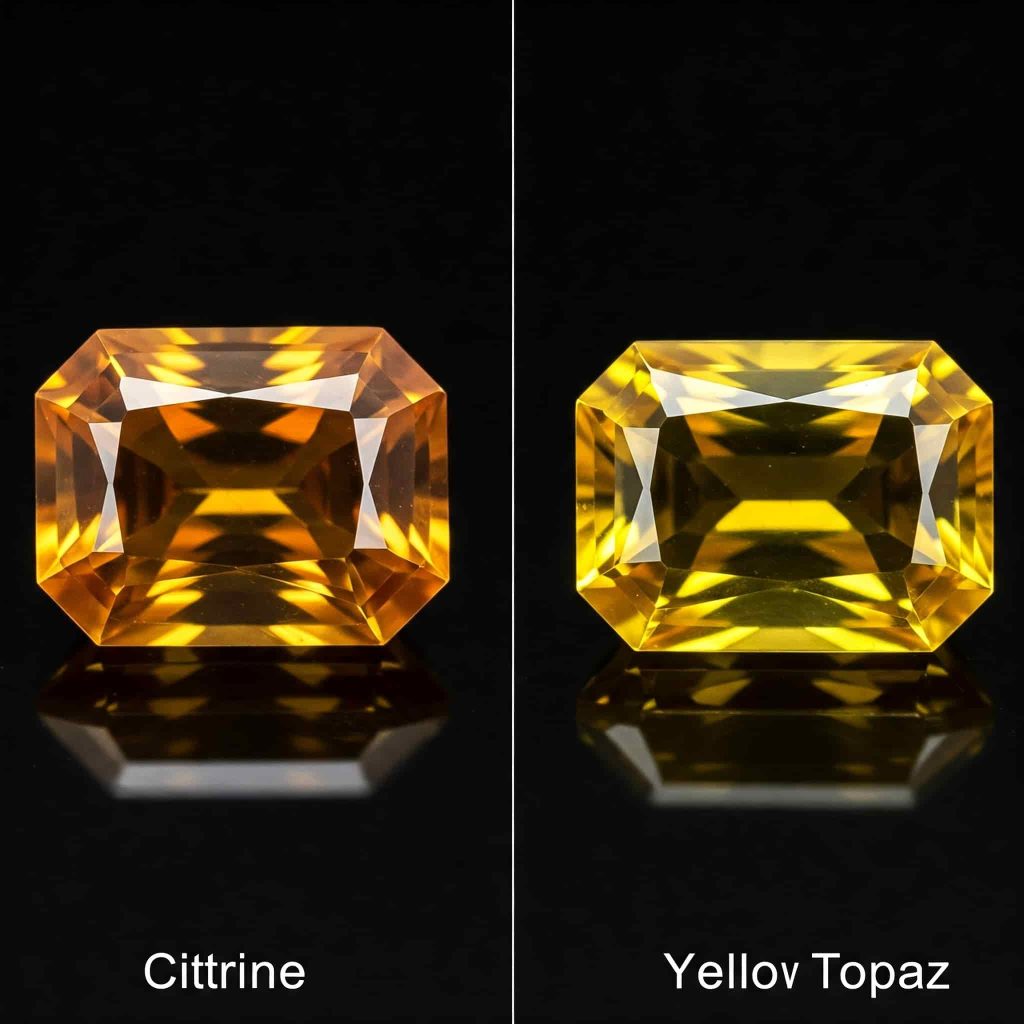
Yellow Topaz Color: Yellow topaz generally comes in shades of light to bright yellow, sometimes with a hint of green or gold.
The color of yellow topaz is usually cooler and brighter than citrine, often resembling lemon or canary yellow. It lacks the orange or brown undertones commonly found in citrine.
Topaz is a type II gemstone, meaning it often has some inclusions, but high-quality yellow topaz can be very clear and transparent. It tends to have a glassy luster.
Yellow topaz typically has fewer secondary undertones, making its color appear purer and more vibrant. However, some yellow topaz may have slight greenish or golden undertones, depending on the specific stone.
Read Worthy: – Blue Sapphire vs. Yellow Sapphire
Yellow Topaz vs Citrine: Physical Properties
Chemical Composition:
Yellow Topaz: Aluminum silicate fluoride hydroxide (Al₂SiO₄(F,OH)₂).
Citrine: Silicon dioxide (SiO₂), a variety of quartz with trace iron impurities.
Hardness (Mohs Scale):
Yellow Topaz: 8 (highly scratch-resistant).
Citrine: 7 (less hard than topaz).
Specific Gravity:
Yellow Topaz: 3.5–3.6 g/cm³ (denser, feels heavier for its size).
Citrine: ~2.65 g/cm³ (lighter).
Crystal System:
Yellow Topaz: Orthorhombic (prismatic crystals with striations).
Citrine: Trigonal (hexagonal prismatic crystals).
Cleavage/Fracture:
Yellow Topaz: Perfect basal cleavage (splits easily along one plane).
Citrine: Conchoidal fracture (no cleavage; breaks like glass).
Luster:
Both exhibit vitreous (glass-like) luster.
Yellow Topaz vs Citrine: Price Comparison
In terms of price, Yellow Topaz is considerably more expensive than Citrine. The price of Yellow Topaz can range from ₹1,500 to ₹10,000 or more per carat, depending on factors like color intensity, clarity, cut, origin, and whether the gemstone is natural or treated. Natural, untreated, and high-clarity Yellow Topaz stones from sources like Brazil and Sri Lanka typically command premium prices. Citrine, on the other hand, is much more budget-friendly, with prices generally ranging from ₹100 to ₹1,500 per carat. The most common citrines in the market are actually heat-treated amethysts or smoky quartz, which further lowers their cost.
The key reasons behind this price difference lie in rarity and market perception. Yellow Topaz is less commonly found in high quality, which adds to its value, while Citrine is widely available and mostly lab-enhanced, making it an affordable option. Moreover, Yellow Topaz often holds astrological significance, especially in Vedic astrology where it’s associated with Jupiter (Guru), further driving its demand and price. Citrine, while attractive and vibrant, is typically used in fashion jewelry and considered a more economical choice.
Don’t Miss: – Yellow Sapphire Vs Citrine
Citrine vs Yellow Topaz: Astrological Benefits
Those seeking emotional healing might gravitate toward citrine’s warming properties that are said to dissolve depression and anxiety. The stone’s vibration reportedly stimulates optimism and self-confidence, making it popular for those battling self-doubt.
Yellow topaz, being harder on the Mohs scale, is thought to provide more robust protection against psychic attacks and negative influences. Many astrologers recommend it specifically for November-born individuals as it serves as a traditional birthstone.
Both gems are believed to harmonize with the solar plexus chakra, potentially improving digestion and metabolism when worn close to this energy center. However, their energy signatures differ subtly—citrine’s energy feels more dynamic and outward-moving while topaz provides a steady, grounding force according to crystal healers.
For manifestation work, practitioners often prefer citrine due to its ability to cleanse and charge simultaneously—it’s one of the few crystals that reportedly never needs energetic cleaning.
Yellow topaz requires regular cleansing but offers more focused intention amplification. When selecting between these golden gems for astrological purposes, considering one’s birth chart is essential—those with challenging Jupiter placements might benefit more from citrine’s jovial energy, while those with Sun challenges might find yellow topaz more balancing.
Modern crystal workers sometimes use both stones together, placing citrine to attract opportunities and yellow topaz to provide the wisdom to capitalize on them effectively.
Also Read: – Yellow Sapphire vs Yellow Topaz
Citrine vs Yellow Topaz: Popularity & Affordability
Popularity:
Citrine enjoys widespread popularity, especially in jewelry, due to its warm, sunny hues ranging from pale yellow to deep amber. It’s often associated with positivity and abundance, earning it a reputation as the “merchant’s stone” in metaphysical circles, which boosts its appeal among those interested in gemstone lore. Its versatility—suitable for rings, pendants, and earrings—also makes it a favorite. Citrine’s status as the birthstone for November further elevates its demand, particularly in Western markets. Because much of the citrine available is heat-treated amethyst (a plentiful gem), it’s widely accessible, keeping it consistently popular.
Yellow topaz, meanwhile, has a more niche but still significant following. Its bright, golden shades are prized for their elegance and clarity, and it’s also a November birthstone, sharing that distinction with citrine. However, yellow topaz tends to attract those who appreciate its rarity and slightly more luxurious reputation. It’s less ubiquitous than citrine, partly because natural yellow topaz is less common than treated citrine, and its popularity spikes in high-end jewelry markets or among collectors. In some cultures, like India, topaz has historical significance, adding to its allure in specific regions.
Affordability:
Citrine is generally more affordable than yellow topaz. As a quartz variety, it benefits from quartz’s abundance in the Earth’s crust. Even high-quality natural citrine is relatively inexpensive compared to other gems, with prices typically ranging from $5 to $30 per carat, depending on color intensity and clarity. The prevalence of heat-treated amethyst masquerading as citrine keeps costs low, making it an accessible choice for budget-conscious buyers. Larger stones are also easier to find, adding to its value-for-money appeal.
Yellow topaz, while still reasonably priced compared to gems like sapphire or diamond, tends to be more expensive than citrine. Natural, untreated yellow topaz can range from $10 to $50 per carat or more, depending on size, quality, and origin (e.g., Brazilian topaz from Ouro Preto commands a premium). Its silicate composition and less abundant natural occurrence contribute to the higher cost. Treated or irradiated yellow topaz is cheaper, often closer to citrine’s price range, but discerning buyers seeking untreated stones will pay more. Topaz’s durability (Mohs hardness of 8 vs. citrine’s 7) also adds to its perceived value, though it’s still considered an affordable gem in the broader market.
Check Out: –Ruby vs Pink Sapphire
